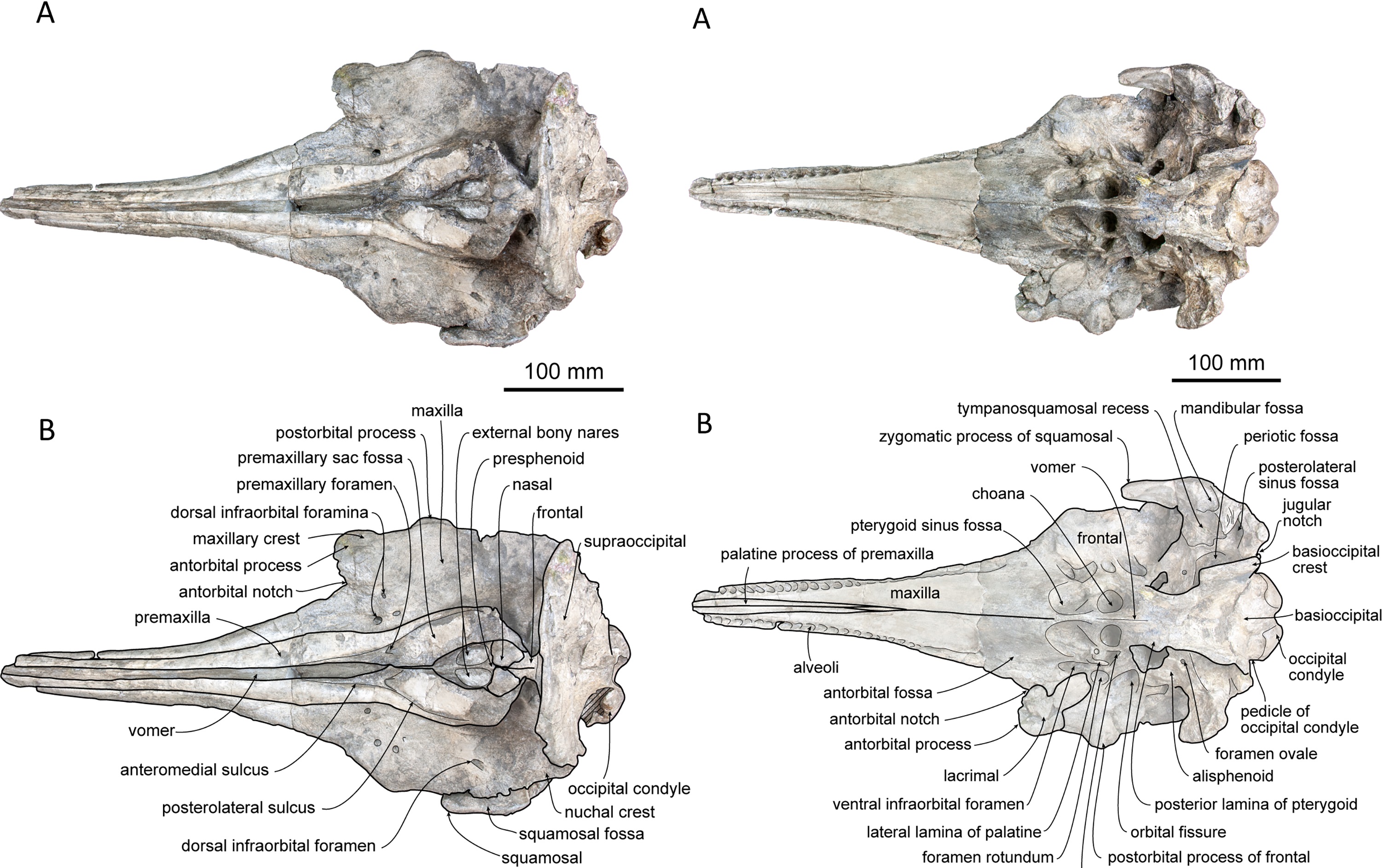
2023 has been the worst year of my adult life. Within the span of a month, we lost our cat Burt Reynolds to a stroke (we got him in New Zealand), we lost my father-in-law to brain cancer, and the work environment we had formerly enjoyed had deteriorated so much that it reached a tipping point and we both resigned from CofC. Later this fall, my Ph.D. adviser, Dr. R. Ewan Fordyce, passed away - robbed of a long, peaceful, and productive retirement. This year has really been a crucible - and what has emerged for us is a complete lack of tolerance for mismanagement, wage theft, academic bullying, and other issues we've faced in the past. This whole experience has been an exercise in taking punishment and setting boundaries. It hasn't been all bad: I got two enormous monographs published this year - one on the toothed mysticete Coronodon and the other on the early dolphin Xenorophus, both from the Oligocene of South Carolina.
Aside from those studies, this year has seen a number of great papers - another monograph on stem odontocetes by Jorge Velez-Juarbe on Washingtonian simocetid dolphins. Two new spectacular basilosaurids were reported: the tiny Tutcetus, and the absolutely monstrous Perucetus colossus - the latter with body mass estimates overlapping with and exceeding the blue whale. Our Ukrainian colleagues have managed to resume research life now that the situation over there has improved quite a bit - Svitozar Davydenko has succeeded in publishing three papers on archaeocete limbs this year. Calvert Cliffs volume II came out this year, five years after volume I, and includes a monograph reporting all of the fossil odontocetes known from the cliffs. Amber Coste has published two long-awaited papers on 'waipatiid' grade dolphins from the Oligocene of New Zealand from her thesis research - these new tusked dolphins, Nihohae and Nihoroa, are welcome additions to our pantheon of Oligocene whales. It was a slow year for pinnipeds and sirenians, unfortunately (but don't fret: there are some great papers that will be coming out next year!).
Now: I have possibly, if not probably, missed something. If I have, please let me know in the comments! But!: please check the 2022 review to make sure it was not a paper that came out in 2022 with 'online early' status and formally published this year. The usual disclaimers apply: I absolutely will not update the posts to shift a 2022 online early publication to this year; multiple papers by the same author are not necessarily in alphabetical order and you just have to accept that; lastly, the study must report fossil (or subfossil) material. Papers by paleontologists reporting modern osteological specimens are not paleontological studies and therefore do not make the cut. Also: I have not, and will not, type all of these out into journal reference format. And yes: I've been asked to do all of these things. Papers I formally reviewed are marked with an asterisk (a surprising minority this year!).

Ando et al.: Discovery of a whole skeleton of a paleoparadoxiid from the Shukunohora Formation of the Mizunami Group in Kamado-cho, Mizunami City, Gifu, Japan.
[Abstract in Japanese] 2022年6月5日,岐阜県瑞浪市釜戸町の土岐川河床に 分布する中新統瑞浪層群宿洞層からパレオパラドキシア 科(束柱目)の骨格化石が発見された(図1).骨格は少 なくとも腰椎,仙椎,右後肢が関節した状態で保存され,さらに一連の左肋骨遠位端の整然とした露出状況や頭部 も非常に近い位置に保存されていたことから胸部~頭部 の骨格も関節状態で保存されていることが予測され,さ らに河床に露出しているため標本流出の恐れがあったこ とから,6月10日に緊急発掘を実施した(図2). 現在,瑞浪市役所・教育委員会の関係課と研究者が連
携し,あわせて市内外の方々から様々な支援を受けなが ら「瑞浪産パレオパラドキシア全身骨格化石復元プロジェ クト」を実施し,瑞浪市化石博物館で標本の剖出を進め ている.その結果,前肢を除くほぼ全身の骨格が関節 した状態を残して保存されていること,パレオパラドキ シア科に特徴的な円柱を束ねたような歯冠の低い臼歯が 上下顎に植立した状態で保存されていることが判明した (図3, 4).今後,骨格の復元,系統分類学的な位置づけ,古生態の復元,埋没過程の解明,古環境の解明など多岐 の分野にわたる研究を進めていく予定である.
Antar et al.: A diminutive new basilosaurid whale reveals the trajectory of the cetacean life histories during the Eocene.Soon after whales originated from small terrestrial artiodactyl
ancestors, basal stem forms (archaeocetes) came to inhabit more
specialized aquatic ecologies and underwent a tremendous adaptive
radiation that culminated in the adoption of a fully aquatic lifestyle.
This adaptive strategy is first documented by the geographically
widespread extinct family Basilosauridae. Here we report a new
basilosaurid genus and species, Tutcetus rayanensis, from the
middle Eocene of Fayum, Egypt. This new whale is not only the smallest
known basilosaurid, but it is also one of the oldest records of this
family from Africa. Tutcetus allows us to further test hypotheses
regarding basilosaurids’ early success in the aquatic ecosystem, which
lasted into the latest Eocene, and their ability to outcompete
amphibious stem whales and opportunistically adapt to new niches after
they completely severed their ties to the land. Tutcetus also
significantly expands the size range of the basilosaurids and reveals
new details about their life histories, phylogeny, and
paleobiogeography.
Comments: A great new paper by my Egyptian colleagues, many of whom were coauthors on our earlier Phiomicetus paper led by Abdullah Gohar. The specimen itself is surprisingly small - scarcely larger than a bottlenose dolphin - and old, one of the older basilosaurid specimens. This alone is interesting as it overlaps in size with earlier protocetids. However, what I find most interesting about this new work is the discussion on ontogeny and dental eruption - Tutcetus - yes, named after King Tut - has permanent teeth that erupt relatively early in growth and suggest a precocial lifestyle. I see papers like this that delve into life history as a welcome expansion of topics we should be discussing in marine mammal paleontology (and they're topics I think about a lot).
Bakker et al.: Een voor de Noordzee nieuwe doejong, Halitherium sp. (Mammalia, Sirenia), van de Westerschelde-mondingIn this article we describe a first find of a seacow, Halitherium sp. A marine mammal best known from Oligocene deposits from the Mainz Basin, Germany, among others. It concerns the proximal portion of a right upper arm bone, a humerus, heavily fossilized and graybrown in color, which was trawled from the estuary of the Western Scheldt, Zeeland, the Netherlands. We know that it was trawled by fishermen from the mouth of the Western Scheldt, but that area is quite large and includes, among others, the fossil sites of ‘De Wielingen’ (the Netherlands) and, as an extension of that navigational route, ‘Het Scheur’ (Belgium). Based on morphological differences and size, this proximal humerus can be easily distinguished from other Sirenia. In this article we also give an overview of the different members of the seacows (Sirenia) and their evolution.
Beatty: Further desmostylian remains from the upper Oligocene of Vancouver Island, British Columbia, Canada.
The North Pacific rim was home to an extinct group of semiaquatic
marine mammals, the order Desmostylia, which
superficially resembled hippos. Desmostylians are an uncommon
fossil vertebrate in most localities where they occur,
and Oligocene taxa particularly so. Beyond the type
dentition and two femora of Cornwallius sookensis, and
the skull and postcrania of Behemotops proteus, both previously
described from the region of Muir Creek locality
of the upper Oligocene Sooke Formation of southern coast
of Vancouver Island, British Columbia, Canada, no other
records from this site have been reported. Additional specimens
of teeth have now been found in the Royal British
Columbia Museum and Canadian Museum of Nature, including
a long-forgotten and unreported paratype. In total,
three additional teeth, one of B. proteus and two possibly
belonging to C. sookensis, are reported here from its type
locality. More importantly, the upper molar reported here,
as well as UCMP 36078 from Baja California and USNM
181740 from Oregon, all resemble each other but should be
considered as belonging to Cornwallius only with caution.

Benites-Palomino et al.: Bridging two oceans: small toothed cetaceans (Odontoceti) from the Late Miocene Chagres Formation, eastern Caribbean (Colon, Panama).
Fossil cetaceans are often found in Miocene marine outcrops across the
globe. However, because this record is not homogeneous, the dissimilar
increase in occurrences, along with the sampling bias has created
regions with extensive records and others with great scarcity. Among
these, the Caribbean has remained enigmatic due to the lack of
well-preserved cetacean fossils. Here, we report new Caribbean fossil
cetaceans from the Upper Miocene Chagres Formation exposed along Piña
beach, Eastern Panama, including a scaphokogiine kogiid, an Acrophyseter-like physeteroid and the phocoenid Piscolithax. Along with previous records of the iniid Isthminia panamensis and the kogiine Nanokogia isthmia,
the Chagres cetacean fauna shows some similarities with other Late
Miocene cetacean communities such as the Californias in the North
Pacific, although their closest affinities lie with the eastern South
Pacific Pisco Formation, Peru. Such findings indicate that though deep
and intermediate Caribbean–Pacific water interchange was reduced by the
Middle Miocene due to the shallowing of the Central American Seaway,
shallow waters marine connection that persisted until the Pliocene might
have facilitated the dispersal of coastal species across both sides of
the Isthmus.
Comments: Not exactly on California fossils, but still an extremely welcome addition to eastern Pacific whaleontology: this study helps fill in a bit of a geographic gap during the late Miocene. Some of these taxa are known from the upper Miocene of California, like Piscolithax - and we find teeth of an Acrophyseter-like sperm whale from these deposits as well. Back in 2013 I compared and contrasted Pliocene/late Miocene marine mammal assemblages from around the world, and it's nice to see similar studies chasing that up (and getting into high profile journals, for that matter).
Bianucci et al.: A heavyweight early whale pushes the boundaries of vertebrate morphology.The fossil record of cetaceans documents how terrestrial animals
acquired extreme adaptations and transitioned to a fully aquatic
lifestyle1,2.
In whales, this is associated with a substantial increase in maximum
body size. Although an elongate body was acquired early in cetacean
evolution3, the maximum body mass of baleen whales reflects a recent diversification that culminated in the blue whale4. More generally, hitherto known gigantism among aquatic tetrapods evolved within pelagic, active swimmers. Here we describe Perucetus colossus—a
basilosaurid whale from the middle Eocene epoch of Peru. It displays,
to our knowledge, the highest degree of bone mass increase known to
date, an adaptation associated with shallow diving5. The estimated skeletal mass of P. colossus
exceeds that of any known mammal or aquatic vertebrate. We show that
the bone structure specializations of aquatic mammals are reflected in
the scaling of skeletal fraction (skeletal mass versus whole-body mass)
across the entire disparity of amniotes. We use the skeletal fraction to
estimate the body mass of P. colossus, which proves to be a
contender for the title of heaviest animal on record. Cetacean peak body
mass had already been reached around 30 million years before previously
assumed, in a coastal context in which primary productivity was
particularly high.
Comments: I was asked to comment on this by several journalists the day I tendered my resignation from CofC - my first day as a 'free agent' I spent traveling to spend time with my family at Lake Tahoe and speaking on the phone with journalists during my layover at O'Hare. Needless to say this paper has left an indelible imprint on me. It's become somewhat controversial and I don't really understand why: Perucetus is a colossal basilosaurid whale, and while it's not terribly complete, I think the estimates and methods used are appropriate. Most of the folks complaining about this study are dino-weenies who are probably just mad that yet another whale has outranked dinosaurs as the largest/heaviest animals ever.
Now, on a scientific level: just like Tutcetus, this gives a surprising expansion to the range of body forms in basilosaurid whales. Perucetus is as large or possibly even larger than Basilosaurus cetoides, and given how incredibly inflated and dense/heavy the bones are, it almost certainly had a very different ecology than other basilosaurid whales. The authors suggest three possibilities: shallow water benthic foraging on seagrasses or algae like sirenians, foraging on marine invertebrates, and scavenging on carcasses. The authors rightly indicate that herbivory is quite unlikely: the last prior herbivorous "cetacean" was Indohyus and such an ecology is otherwise unknown in cetaceans. The latter I think is unlikely - but admittedly quite similar to the T. rex as a scavenger hypothesis by Jack Horner. As a walrus expert, I am sympathetic to the second hypothesis - but all of these will require further discoveries from Peru to be made and most importantly, a skull with teeth.

Bianucci et al.: A new diminutive fossil ziphiid from the deep-sea floor off northern Chile and some remarks on the body size evolution and palaeobiogeography of the beaked whales.
The evolutionary history of the beaked whales (Ziphiidae), odontocetes nowadays adapted to deep diving, is well known
thanks to a significant fossil record mainly from the deep ocean floors. A partial cranium of a ziphiid recovered from
Plio-Pleistocene deep sea deposits (about 1000 m) off the port of Pisagua, northern Chile, during fishing activity is here
described and referred to the new species Ihlengesi changoensis. Ihlengesi changoensis differs from the type species
Ihlengesi saldanhae, from the sea floor off South Africa, by having a more elongated premaxillary sac fossa and consequently
a more anteriorly located premaxillary foramen; dorsal margin of each premaxillary crest sloping markedly
ventrolaterally and generating an acute dorsal profile of the vertex in anterior view; less anterolateral extension of the
right nasal forming part of the premaxillary crest; lateral margins of the nasals not anteriorly diverging but weakly convex;
nasofrontal suture anteriorly pointed. The phylogeny supports a sister-taxon relationship between I. changoensis and
I. saldanhae, both members of the crown ziphiids Hyperoodontinae. Ihlengesi changoensis shares with I. saldanhae and
other fossil ziphiids a small body size (estimated length 3.5 m) supporting the hypothesis that in the past small beaked
whales (<4 m) were more common than today. Such recent shift of the ziphiids towards a larger size could be the result
of a progressive change of diet from fish to cephalopods, to the competition with the delphinids, and the predatory impact
of the white shark Carcharodon carcharias and/or of the killer whale Orcinus orca. This new Chilean ziphiid further
supports the hypothesis that crown beaked whales originated and firstly dispersed in the oceanic waters of the Southern
Hemisphere. Their radiation and geographical distribution could have been driven by the southern oceanic circulation
and related localized concentration of trophic resources in high productivity upwelling areas.

Bisconti et al.The chronology of mysticete diversification (Mammalia, Cetacea, Mysticeti): Body size, morphological evolution and global change.
A comprehensive revision of the localities of discovery of fossil mysticetes is presented together with a highly inclusive phylogenetic
analysis in order to provide the basis for a chronology of the main
mysticete diversification events. The results suggest that the origin of
Mysticeti (that include earlier toothed taxa together with today
baleen-bearing cetaceans) occurred c. 38 Ma; the origin of Chaeomysticeti (that include only baleen-bearing cetaceans) occurred c. 28 Ma; the origin of Balaenomorpha (crown mysticetes) occurred c.
23.3 Ma. Additional chronological inferences are provided. Within this
chronological framework, we analyzed diversity trends, origination and
extinction patterns and body size evolution, and looked for eventual
causal relationships between evolutionary processes, marine and
terrestrial ecological turnovers and geodynamic
events. We found four main diversification events corresponding to
peaks in originations and, in a few cases, with the origin of different
feeding strategies adopted by the differen mysticete families. We found
that different mechanisms are correlated to specific diversification
events and these include changes in temperature and ocean circulation
patterns, nutrient availability in the water column and diatom abundance
and diversity. Resuming, no single mechanism explains all the
diversification events occurred during mysticete evolution; rather, we
found that each diversification event was correlated to different
combinations of biotic and abiotic factors, suggesting that this group experienced major adaptation processes to the changing paleoenvironments in the last 38 Ma.

Bisconti et al.: Taphonomy, osteology and functional morphology of a partially articulated skeleton of an archaic Pliocene right whale from Emilia Romagna (NW Italy).
A partial skeleton of a Pliocene balaenid whale (Mammalia, Cetacea, Mysticeti) is described and compared to a large set of extant and fossil Balaenidae. The specimen (MCRE 232834) includes a jugal, both mandibular rami and part of the postcranial skeleton including several vertebrae, complete ribs, hyoid, pelvis, a single scapula and a single partial forelimb. The specimen was found at a site in the vicinity of the San Valentino Castle, about 16 km S from Reggio Emilia, close to the town of Castellarano, Emilia Romagna (northern Italy). Molluscs and foraminifers indicate a late Zanclean age for MCRE 232834, constrained between 3.8 and 3.6 Ma. A taphonomic analysis revealed that after death the individual sunk on the sea floor upside down and underwent a series of biostratinomic processes eventually leading to the collapse of the ribcage and to the disarticulation of the posterior thoracic, lumbar and caudal vertebrae, together with the loss of several skeletal elements including the skull. Shark teeth and encrusting molluscs demonstrate that the specimen was exploited by different organisms during its decay. The study of the skeleton revealed that MCRE 232834 shows an abruptly converging anterior ends of the mandibular rami, well-developed olecranon process in the ulna, peculiar morphology of the cervical vertebrae and enlarged attachment sites for axial muscles in the ribs. Based on the morphology of the cervical vertebrae, mandible and scapula, MCRE 232834 can be assigned to a new genus and species of the family Balaenidae, i.e., Charadrobalaena valentinae n. gen., n. sp., which is part of a primitive clade of balaenids that is the sister group of the crown balaenid whales. A functional analysis of the vertebral column revealed that it was able of comparatively faster and more agile swimming with respect to the extant balaenid species.

Boessenecker et al.: New specimens and species of the Oligocene toothed baleen whale Coronodon from South Carolina and the origin of Neoceti.Baleen whales (Mysticeti) are gigantic filter-feeding cetaceans
possessing the unique soft tissue structure baleen and lacking adult
teeth; Oligocene fossils have revealed a wealth of early diverging
tooth-bearing mysticetes highlighting the transition from archaeocete
ancestors to early toothless baleen-bearing eomysticetid whales. The
archaeocete-like, toothed mysticete Coronodon havensteini from
the lower Oligocene Ashley Formation of South Carolina possesses a
number of peculiar aspects of feeding morphology suggesting dental
filter-feeding in the earliest diverging mysticete lineage. New fossils
of Coronodon are described in detail, including (1) supplementary description of the holotype skull and skeleton of Coronodon havensteini; (2) description of two new juvenile skulls of C. havensteini and a partial skull and postcranial skeleton of an adult; (3) description of the new species Coronodon planifrons n.sp.; and (4) description of the new species Coronodon newtonorum. New specimens of Coronodon havensteini
include a partial adult skeleton preserving new elements for the
species including incisors, numerous upper premolars and molars, lower
m4, scapula, lumbar, and caudal vertebrae, and two juvenile skulls with
tympanoperiotics and teeth. Fossils from the overlying unit, the
Chandler Bridge Formation, represent two new species: Coronodon newtonorum n. sp. and Coronodon planifrons n. sp. Coronodon newtonorum
possesses a concave-up alveolar profile, a mandibular condyle elevated
far above the toothrow, and a gracile periotic resembling those of
juvenile C. havensteini. Coronodon planifrons n. sp.
possesses a horizontal supraorbital process, successively smaller upper
molars, massively inflated periotic, and longer intertemporal region. Coronodon planifrons
n. sp. preserves one of the most complete vertebral columns among
toothed mysticetes, indicating nine thoracic vertebrae, ten lumbar
vertebrae, and at least 20 caudal vertebrae. The column exhibits a
somewhat stabilized caudal peduncle with enlarged lumbocaudal vertebrae,
and rectangular terminal caudals indicate the presence of tail flukes.
Juvenile skulls reveal several ontogenetic trends in Coronodon havensteini,
including the anterior migration of the orbitotemporal crest,
anteroposterior elongation of the intertemporal region, inflation of the
body of the periotic, enlargement of the tympanic bulla, and continued
postnatal emergence of the premolars and molars from their alveoli.
Disarticulated skulls suggest a degree of rostral kinesis in this genus.
Phylogenetic analysis of the largest assembled supermatrix of Mysticeti
(n =138 OTUs; four archaeocetes, 10 odontocetes, 124 mysticetes;
391 morphological and 27,225 molecular characters) confirms placement
of Coronodon as the earliest diverging lineage of Mysticeti under equally weighted analyses whereas implied weighting places Coronodon and similar taxa outside Neoceti, prompting a review of character transformations at the base of Neoceti.
Comments: This is one of two monographs I published this year (I am very tired). This one started out in January 2022: we had an invitation to submit an article to a special volume, and we were initially going to publish the results of an analysis we reported on at the 2018 SVP meeting in Albuquerque, NM - reporting several new specimens of the toothed baleen whale Coronodon along with new phylogenetic analyses and a study of microwear in these whales in order to evaluate hypotheses of feeding behavior in early Mysticeti. Well, by July 2022 the descriptions were nearly completed and everything else had kind of ballooned and we realized we needed at least two different manuscripts - by October, the deadline, we realized we needed three different manuscripts as the descriptive paper (on its own) was already going to be a monographic-length work. As it turned out, we assumed because the journal was online and open access that there wouldn't be page limits, and the descriptive paper ended up being four times longer than the page limit - so we submitted it to PeerJ instead.
This study is the culmination of about five years of observations, but really only one year of writing. There's nothing much else research-wise that I spent doing in 2022, with the exception of the even-longer monograph published seven months later (see below!) and a cute 'little' paper coming out early 2024. This paper reports the first growth series for any toothed mysticete, names two new species of Coronodon from the Chandler Bridge Formation, Coronodon planifrons and Coronodon newtonorum. The latter was based on a manuscript name used by the late Al Sanders - 'newtoni' - except that we didn't know which member of the Newton family (who found the fossil - ChM PV 2778) - was to be honored by the name. So, at the last minute - literally during page proofs - we changed the name to 'newtonorum'.
We published this in April, and presented data from one of our two follow-up papers at this year's SVP meeting in Cincinatti, which was well-received - and as soon as the holidays are over, the three of us are going to get it wrapped up and start finalizing the tooth wear manuscript as well.
Boessenecker and Geisler: New Skeletons of the Ancient
Dolphin Xenorophus sloanii and Xenorophus simplicidens sp. nov. (Mammalia,
Cetacea) from the Oligocene of South Carolina and the Ontogeny, Functional
Anatomy, Asymmetry, Pathology, and Evolution of the Earliest Odontoceti.
The early diverging, dolphin-sized, cetacean clade Xenorophidae are a
short-lived radiation of toothed whales (Odontoceti) that independently
evolved two features long thought to be odontocete synapomorphies: the
craniofacial and cochlear morphology underlying echolocation and
retrograde cranial telescoping (i.e., posterior migration of the
viscerocranium). This family was based on Xenorophus sloanii,
which, for the past century, has been known only by a partial skull
lacking a braincase and tympanoperiotics, collected around 1900 from the
Ashley Formation (28–29 Ma, Rupelian) near Ladson, South Carolina. A
large collection of new skulls and skeletons (ChM PV 5022, 7677; CCNHM
104, 168, 1077, 5995) from the Ashley Formation considerably expands the
hypodigm for this species, now the best known of any stem odontocete
and permitting evaluation of intraspecific variation and ontogenetic
changes. This collection reveals that the holotype (USNM 11049) is a
juvenile. Xenorophus sloanii is a
relatively large odontocete (70–74 cm CBL; BZW = 29–31 cm; estimated
body length 2.6–3 m) with a moderately long rostrum (RPI = 2.5), marked
heterodonty, limited polydonty (13–14 teeth), prominent sagittal crest
and intertemporal constriction, and drastically larger brain size than
basilosaurid archaeocetes (EQ = 2.9). Dental morphology, thickened
cementum, a dorsoventrally robust rostrum, and thick rugose enamel
suggest raptorial feeding; oral pathology indicates traumatic tooth loss
associated with mechanically risky predation attempts. Ontogenetic
changes include increased palatal vomer exposure; fusion of the
nasofrontal, occipito-parietal, and median frontal sutures; anterior
lengthening of the nasals; elaboration of the nuchal crests; and
blunting and thickening of the antorbital process. The consistent
deviation of the rostrum 2–5° to the left and asymmetry of the palate,
dentition, neurocranium, mandibles, and vertebrae in multiple specimens
of Xenorophus sloanii suggest novel
adaptations for directional hearing driven by the asymmetrically
oriented pan bones of the mandibles. A second collection consisting of a
skeleton and several skulls from the overlying Chandler Bridge
Formation (24–23 Ma, Chattian) represents a new species, Xenorophus simplicidens n. sp., differing from Xenorophus sloanii
in possessing shorter nasals, anteroposteriorly shorter supraorbital
processes of the frontal, and teeth with fewer accessory cusps and less
rugose enamel. Phylogenetic analysis supports monophyly of Xenorophus, with specimens of Xenorophus simplicidens nested within paraphyletic X. sloanii;
in concert with stratigraphic data, these results support the
interpretation of these species as part of an anagenetic lineage. New
clade names are provided for the sister taxon to Xenorophidae
(Ambyloccipita), and the odontocete clade excluding Xenorophidae, Ashleycetus, Mirocetus,
and Simocetidae (Stegoceti). Analyses of tooth size, body size,
temporal fossa length, orbit morphology, and the rostral proportion
index, prompted by well-preserved remains of Xenorophus, provide insight into the early evolution of Odontoceti.
Comments: I have not poured this much effort into any other project. I worked on this beast for five years, with much of the work being done in 2020.
Burin et al.: The dynamic adaptive landscape of cetacean body size.Adaptive landscapes are central to evolutionary theory, forming a conceptual bridge between micro- and macroevolution. Evolution by natural selection across an adaptive landscape should
drive lineages toward fitness peaks, shaping the distribution of
phenotypic variation within and among clades over evolutionary
timescales. The location and breadth of these peaks in phenotypic space can also evolve, but whether phylogenetic comparative methods can detect such patterns has largely remained unexplored.
Here, we characterize the global and local adaptive landscape for total
body length in cetaceans (whales, dolphins, and relatives), a trait
that spans an order of magnitude, across their -million-year evolutionary history. Using phylogenetic comparative methods, we analyze shifts in long-term mean body length and directional changes in average trait values for 345 living and fossil cetacean taxa. Remarkably, we find that the
global macroevolutionary adaptive landscape of cetacean body length is
relatively flat, with very few peak shifts occurring after cetaceans
entered the oceans. Local peaks are more numerous and manifest as trends
along branches linked to specific adaptations. These results contrast
with previous studies using only extant taxa, highlighting the vital role of fossil data for understanding macroevolution. Our results indicate that adaptive peaks are dynamic and are associated
with subzones of local adaptations, creating moving targets for species
adaptation. In addition, we identify limits in our ability to detect
some evolutionary patterns and processes and suggest that multiple
approaches are required to characterize complex hierarchical patterns of
adaptation in deep time.

Late Pleistocene fossils from southern Brazil provide a unique
opportunity to study the diet and habitat use of the extant franciscana
dolphin (Pontoporia blainvillei) prior to human influence. Here,
we subject 19 fossil and 21 contemporary specimens to stable carbon and
oxygen isotope analysis (after first ruling out diagenesis via Fourier
transform infrared spectroscopy). The two groups differ in their
isotopic composition (PERMANOVA, p < .01), with fossils yielding more disparate δ13C values and recent samples more disparate δ18O values. Their isotopic niches show an overlap of ~20%, with that of the fossils being slightly wider (SEAc = 2.25‰2 versus 1.84‰2). We attribute these differences to impoverished modern fish communities and temporal changes in freshwater influx.
Collareta et al.: Polyplacophoran Feeding Traces on Mediterranean Pliocene Sirenian Bones: Insights on the Role of Grazing Bioeroders in Shallow-Marine Vertebrate Falls.Chitons (Polyplacophora) include some of the most conspicuous bioeroders
of the present-day shallow seas. Abundant palaeontological evidence for
the feeding activity of ancient chitons is preserved in the form of
radular traces that are usually found on invertebrate shells and
hardgrounds. We report on widespread grazing traces occurring on partial
skeletons of the extinct sirenian Metaxytherium subapenninum
from the Lower Pliocene (Zanclean) of Arcille (Grosseto Province,
Tuscany, Italy). These distinctive ichnofossils are described under the
ichnotaxonomic name Osteocallis leonardii
isp. nov. and interpreted as reflecting substrate scraping by
polyplacophorans. A scrutiny of palaeontological literature reveals that
similar traces occur on fossil vertebrates as old as the Upper
Cretaceous, suggesting that bone has served as a substrate for chiton
feeding for more than 66 million years. Whether these bone modifications
reflect algal grazing, carrion scavenging or bone consumption remains
unsure, but the first hypothesis appears to be the most parsimonious, as
well as the most likely in light of the available actualistic data. As
the role of bioerosion in controlling fossilization can hardly be
overestimated, further research investigating how grazing organisms
contribute to the biostratinomic processes affecting bone promises to
disclose new information on how some marine vertebrates manage to become
fossils.

Coombs et al.: Drivers of morphological evolution in the toothed whale jaw.
Toothed whales (odontocetes) emit high-frequency underwater sounds
(echolocate)—an extreme and unique innovation allowing them to sense
their prey and environment. Their highly specialized mandible (lower jaw) allows high-frequency sounds to be transmitted back to the inner ear. Echolocation
is evident in the earliest toothed whales, but little research has
focused on the evolution of mandibular form regarding this unique
adaptation. Here, we use a high-density, three-dimensional geometric
morphometric analysis of 100 living and extinct cetacean species
spanning their ∼50-million-year evolutionary history. Our analyses
demonstrate that most shape variation is found in the relative length of
the jaw and the mandibular symphysis. The greatest morphological
diversity was obtained during two periods of rapid evolution: the
initial evolution of archaeocetes (stem whales) in the early to
mid-Eocene as they adapted to an aquatic lifestyle, representing one of
the most extreme adaptive transitions known, and later on in the
mid-Oligocene odontocetes as they became increasingly specialized for a
range of diets facilitated by increasingly refined echolocation. Low
disparity in the posterior mandible suggests the shape of the acoustic
window, which receives sound, has remained conservative since the advent
of directional hearing
in the aquatic archaeocetes, even as the earliest odontocetes began to
receive sounds from echolocation. Diet, echolocation, feeding method,
and dentition type strongly influence mandible shape. Unlike in the
toothed whale cranium, we found no significant asymmetry in the
mandible. We suggest that a combination of refined echolocation and
associated dietary specializations have driven morphology and disparity
in the toothed whale mandible.

Cooper et al.: Cetacean Evolution: Copulatory and Birthing Consequences of Pelvic and Hindlimb Reduction.
The earliest fossil cetaceans (archaeocetes) dramatically shifted the
shape and articulation of the pelvis and hindlimbs during the
land-to-sea transition. Archaeocetes were mostly semi-aquatic “walking
whales” that used powerful hindlimbs to walk on land and swim to reach
new aquatic sources of food. However, skeletons of the latest diverging
lineages of archaeocetes, the basilosaurids, showed that the pelvis
initially lost articulation with the sacrum, and hindlimbs were reduced
and encased within the body wall. Consequently, basilosaurids were no
longer able to bear their weight on land and probably had a different
mating strategy compared to the other archaeocetes. Basilosaurid mating
behaviors were probably consistent with those of modern cetaceans,
including lateral- and ventral-facing copulation. Moreover, a pelvic
girdle that was no longer constrained by vertebral and limb attachments
likely freed fetal development from size constraints at birth, allowing
for the birth of large fetuses. This study reports new data showing
growth of the pelvis with age in modern bowhead whales (Balaena mysticetus)
and their implications for left-right asymmetry and sex difference in
pelvic dimensions among modern cetaceans. Reproductive structures
present in modern cetaceans and artiodactyls were probably present in
archaeocetes, including pelvic attachment of muscles associated with
erection and mobility of the penis, the ischiocavernosus, in males and
the clitoris of females. Within females, transverse folds along the
vaginal canal are present in some terrestrial artiodactyls, modern
cetaceans, and probably archaeocetes. Vaginal folds were probably
exapted to assist in successful aquatic copulation in all fossil and
modern cetaceans as they may protect some sperm from the lethal effects
of sea water. Taken together, shifts in the pelvic girdle of cetaceans
occurred over 40 million years ago and probably required changes in
mating behaviors that were consistent with those seen in modern
cetaceans.

Coste et al.: A new fossil dolphin with tusk-like teeth from New Zealand and an analysis of procumbent teeth in fossil cetaceans.
Studies involving anatomical description and taxonomy of fossil
odontocetes offer insights into their evolutionary history and
diversity. This study analyses tusk-like teeth in odontocetes including
the description of a new species, Nihoroa reimaea, from the Waitaki valley, North Otago, New Zealand. Dental features of Nihoroa reimaea,
a gracile, longirostrine odontocete with procumbent tusk-like anterior
teeth and slightly denticulate cheek teeth, are described in detail. A
comparative analysis of tusk-like teeth from New Zealand specimens and
from elsewhere in the world was performed allowing a classification of
tusk-like teeth in odontocetes and highlighting the differences between
true tusks and rooted procumbent teeth. Correlation analyses revealed
significant associations between rostrum proportions and tooth crown
morphology. This study contributes to the understanding of tusk-like
teeth and illuminates their significance in odontocete evolution. Nihoroa reimaea
expands our knowledge of fossil cetaceans and highlights the importance
of New Zealand's exceptional fossil record of odontocetes with
tusk-like teeth.

Coste et al.: A new dolphin with tusk-like teeth from the late Oligocene of New Zealand indicates evolution of novel feeding strategies.*
All extant toothed whales (Cetacea, Odontoceti) are aquatic mammals with
homodont dentitions. Fossil evidence from the late Oligocene suggests a
greater diversity of tooth forms among odontocetes, including
heterodont species with a variety of tooth shapes and orientations. A
new fossil dolphin from the late Oligocene of New Zealand, Nihohae matakoi
gen. et sp. nov., consisting of a near complete skull, earbones,
dentition and some postcranial material, represents this diverse
dentition. Several preserved teeth are horizontally procumbent,
including all incisors and canines. These tusk-like teeth suggest
adaptive advantages for horizontally procumbent teeth in basal dolphins.
Phylogenetic analysis places Nihohae among the poorly constrained basal waipatiid group, many with similarly procumbent teeth. Features of N. matakoi
such as its dorsoventrally flattened and long rostrum, long mandibular
symphysis, unfused cervical vertebrae, lack of attritional or occlusal
wear on the teeth and thin enamel cover suggest the rostrum and
horizontally procumbent teeth were used to injure and stun prey though
swift lateral head movements, a feeding mode that did not persist in
extant odontocetes.
Comments: The incredible tusked waipatiid is finally named! This was by far and away the most spectacular of the unpublished fossils in the Fordyce collection at University of Otago, and I'm very glad that it was published this year. Now known to the world as Nihohae matakoi, this Waipatia-like dolphin is hypothesized to have used its teeth a bit like a sawfish or sawshark with lateral sweeping movements of the neck and head to impale fish on its laterally projecting tusks.
Davydenko et al.: Gross
and microscopic anatomy of a tibia tentatively attributed to a cetacean
from the Middle Eocene of Europe, with a note on the artiodactyl Anoplotherium and on the perissodactyl Lophiodon.Transition of cetaceans from a semi-aquatic to a fully aquatic lifestyle
during the Eocene involved numerous transformations of their anatomy,
including reduction of the hind limbs. The earliest fully aquatic
cetaceans retained externally protruding, possibly functional hind
limbs. Being extremely rare, every find of archaeocete hind limb
elements can improve our knowledge on the evolution of locomotor
strategies in cetaceans. Here, we describe the anatomy and inner
microstructure of an isolated tibia fragment, that has been found in the
Middle Eocene of Helmstedt, present-day Germany, with comments on its
affinities and function. Assignment to an archaeocete is most probable,
as other, presently known taxa could be excluded, because of the shape
of the distal epiphyseal side and the internal architecture.
Nevertheless, it cannot be ruled out with complete certainty that this
isolated tibia belongs to a taxon that is new, or is at this moment
unknown from coeval sediments of Europe. Well-developed, distally
extended tibial crests could indicate the capability of movements with
the foot and thus feet-induced aquatic locomotion. The tibia fragment
may belong to a large member of semi-aquatic cetaceans (Protocetidae) or
to a member of Basilosauridae, early fully aquatic whales. It shares
gross and inner morphological features with tibiae of Protocetidae. In
this case, it could be from a large protocetid, certainly more than 4 m
long, and would be the first protocetid find in Europe as well as the
northernmost record of this family in the world. Alternatively, the
tibia may belong to a representative of Basilosauridae, which have been
found in different parts of Europe, including the region of Helmstedt.
If so, it would imply that early basilosaurids had large,
protocetid-like hind limbs. This record shows that large quadrupedal
cetaceans inhabited the seas of Northwestern Europe by the late Middle
Eocene. Not-related finds of our studies are that the terrestrial
lifestyle of the artiodactyl Anoplotherium is confirmed by the inner structure of its long bones, and that some species of the perissodactyl Lophiodon were most probably semi-aquatic, as shown by the inner microstructure of the tibia.

Davydenko et al.: A cetacean limb from the Middle Eocene of Ukraine sheds light on mammalian adaptations to life in water.
There are a few mammalian lineages secondarily adapted to life in water
throughout their evolutionary history. Of them, only sirenians and
cetaceans evolved as fully aquatic organisms. This transition was
accompanied by changes in swimming mode, from foot paddling to
tail-powered propulsion, with the forelimbs acting as efficient
hydrofoils and the gradual loss of external hindlimbs. Here, we describe
an isolated limb from the Middle Eocene of Ukraine, 43–42 Mya,
identified as a hindlimb of a fully aquatic cetacean and being the
earliest cetacean reported from Europe. It is represented by flattened,
jointly articulated bones, identified as the tibia and fibula with a
partly reduced knee joint and loose connection to the pes, and by
flattened phalanges. This anatomy reveals a hitherto only presumed
cetacean morphotype, showing that some of the early fully aquatic
cetaceans were four-legged animals with functional hindlimbs that could
be involved in advanced styles of swimming. They used either body
undulation or lift-based propulsion powered by the tail or feet and
could also use a transitional swimming style combining these modes.

Basilosauridae, fully aquatic archaeocetes from the Eocene, had
osteosclerotic or pachyosteosclerotic structure of ribs and, sometimes,
other bones. Such a structure is far different from osteoporotic-like
bones of modern cetaceans. A microanatomical and histological study was
conducted on axial and limb skeleton of several basilosaurid specimens
assigned to the genus Basilotritus, from Bartonian (late middle
Eocene) deposits of Ukraine, remarkable for its pachyostotic bones. The
postcranial skeleton of these specimens is a complex mosaic of diverse
types of bone structure, which include pachyosteosclerotic,
osteosclerotic and cancellous elements. The vertebrae have a
pachyostotic layered cortex reaching its greatest thickness in the
lumbar region. This cortex was strongly vascularized, and its layered
structure is due to concentric circles mostly made by longitudinal
vascular canals, in addition to cyclical growth lines. Heavy bones are
concentrated in the dorsal and ventral areas. Swollen distal ends of
thoracic ribs are interpreted as serving as ballast in the ventral area,
as also previously proposed for Basilosaurus cetoides.
Cortical bone tissue in vertebrae and ribs showed signs of intensive
resorption and remodeling. This indicates the use of the axial skeleton
not only for buoyancy control but also possibly for calcium and
phosphorus recycling.

Esteban et al.: Investigating the land‑to‑sea transition in carnivorans from the evolution of sacrum morphology in pinnipeds.
The form and function of the sacrum are of great relevance to understand
the evolution of locomotion in tetrapods because it is a key piece of
the vertebrate skeleton. The sacrum connects the caudal and presacral
regions of the vertebral column and the hindlimbs through the pelvis.
Here, we investigate sacrum shape evolution in pinnipeds (Carnivora:
Pinnipedia) in relation to terrestrial mammalian carnivorans
(fissipeds), and we include crown and stem taxa to quantify the
morphological changes they experience in relation to the aquatic
environment they inhabit. We use 3D geometric morphometric methods to
explore the morphological variability and disparity of the sacrum in a
set of terrestrial and aquatic carnivoran species. Our results show that
the morphology of the sacrum of each pinniped family is remarkably
different and that these differences may be related to the aquatic mode
of locomotion (pectoral or pelvic oscillation), the use of hindlimbs to
support body weight on land (otariids in contrast with phocids), and the
presence or absence of a functional tail. In addition,
disparity-through-time analyses indicate that the sacrum of pinnipeds is
less constrained than that of fissipeds, which suggests a gravitational
origin of such constraints in fissipeds. In conclusion, our results
give further support to the important role played by this skeletal
structure in the locomotory adaptations of mammals.

Farroni et al.: Sedimentological and stratigraphically controlled preservation styles and distribution of
fossil cetaceans from a new Early Miocene fossiliferous locality, Patagonia, Argentina.
Prospecting fieldwork in a new fossiliferous locality of the marine
Early Miocene Gaiman Formation (Patagonia, Argentina) results in the
discovery of abundant fossil cetaceans (n = 29). We analyse
stratigraphic, sedimentologic, palaeontologic, and taphonomic data with
the aim of understanding the factors that control the preservation and
distribution of these specimens. The cetacean sample is dominated by
small odontocetes exhibiting five different preservation categories.
Based on sedimentological features, three distinct facies were
recognised in the stratigraphic section. Stratigraphically condensed
deposits of facies C, related to a ravinement surface and subsequent
transgressive deposits, enclose 52% of the specimens, grading from
isolated postcranial elements to articulated and associated postcranial
and cranial elements. In contrast, facies A and B exhibit predominantly
isolated postcranial elements. Facies C shows higher degrees of
corrosion, encrustation and fragmentation than those specimens from
facies A and B, reflecting differences in preservation quality among the
facies. The higher abundance and evidence of long exposure times
recorded for facies C seems to be resulted mostly from physico-chemical
factors after stratigraphic condensation. Finally, intrinsic biological
features and ecological preferences of the specimens could explain the
dominance of small-sized odontocetes in a restricted inner shelf to
lower shoreface environmental setting.
Comments: I really need to read this one, but it was very satisfying to see conceptual figures like the one above like those that I published in my master's thesis on the taphonomy of the Purisima Formation.
Gaetan et al.: A new squaloziphiid-like odontocete from the Early Miocene of Patagonia expands the
cetacean diversity in the southwestern Atlantic Ocean. The Early Miocene Gaiman Formation, from Argentina, houses a taxonomic
variety of odontocetes, mainly dominated by platanistoids and
physeteroids. In this work, we describe a new medium-sized odontocete, Crisocetus lydekkeri
gen. et sp. nov., based on a partial skull, which expands the diversity
of odontocetes in the Early Miocene beds of Patagonia (Argentina). The
phylogenetic analyses placed C. lydekkeri within the crown Odontoceti, stemward to delphinidans, ziphiids, and physeteroids. Crisocetus lydekkeri displays a set of characters that are shared with the members of the Squaloziphiidae family (i.e., Squaloziphius emlongi and Yaquinacetus meadi),
such as a massive postglenoid process of the squamosal, ventrally
longer than the posttympanic process and the exoccipital; apex of
postglenoid process anteroposteriorly longer than transversely thick;
presence of a deep emargination by a neck muscle fossa on the posterior
end of the zygomatic process; basioccipital crests forming an angle of
circa 70–90°; and a basioccipital width wider than 51% of the skull
width in ventral view. Thus, we recognize a squaloziphiid-like
morphology shared by C. lydekkeri, S. emlongi, Y. meadi, and even Dolgopolis kinchikafiforo. Our phylogenetic analyses partially support the inclusion of C. lydekkeri within Squaloziphiidae, however this family is recovered with low support. Finally, the presence of C. lydekkeri and even D. kinchikafiforo
in the Early Miocene of Patagonia expands the paleogeographic
distribution of squaloziphiid-like forms to the southwest coast of the
Atlantic Ocean, suggesting that these taxa had an almost antitropical
distribution.
Comments: I really, really wish this specimen had a periotic!
Godfrey and Lambert: Miocene toothed whales (Odontoceti) from Calvert Cliffs, Atlantic Coastal Plain, USA.
[Abstract for entire Volume] This volume is a follow-on to a work published by Smithsonian
Institution Scholarly Press in 2018 on the Miocene vertebrate fauna from
Calvert Cliffs, Maryland, USA. Two chapters are included in this
compendium, one on turtles (chelonians) and the other on toothed whales
(odontocetes). It is anticipated that at least one more volume will be
needed to complete the taxonomic review. Robert E. Weems details the
occurrence of 19 kinds of chelonians that have been discovered in the
Miocene and Pliocene marine strata of Delaware, Maryland, and Virginia,
USA, 13 of them in the Calvert Cliffs. The most commonly found remains
are those of an extinct sea turtle, Trachyaspis lardyi. Remains of four other marine turtles, Procolpochelys grandaeva, Lepidochelys sp., a generically indeterminate cheloniid, and a leatherback turtle (Psephophorus polygonus),
are far less common. The other 14 chelonian taxa are nonmarine forms
that inhabited the land, rivers, and marshes west of the Mid-Atlantic
Seaboard during the Miocene. They were washed into the coastal marine
environments that were then accumulating the sediments exposed today as
the strata in the Calvert Cliffs. Stephen J. Godfrey and Olivier Lambert
review the taxonomically diverse odontocete fauna of 29 named species.
Nine of these Miocene taxa represent newly named species. Fragmentary
remains hint at even greater diversity. Reviewed taxa are restricted to
those known from along the Calvert Cliffs and other Miocene age deposits
on the Atlantic Coastal Plain in Maryland and Virginia, USA. They range
in age from approximately 22 to 8 Ma and derive from the Calvert,
Choptank, and St. Marys Formations. This fauna preserves one of the most
abundant and diverse assemblages of extinct toothed whales known. None
of the named odontocete species included in this review are known from
beyond the North Atlantic Ocean. In terms of their chronostratigraphic
distribution, collectively, they range in age from the Aquitanian
through the Tortonian, with the large majority occurring within the
Burdigalian, Langhian, and Serravallian stages (the latter two being the
most speciose). The greatest taxonomic diversity occurred during the
Middle Miocene Climate Optimum, a time (ca. 17–15 Ma) when global
average temperatures were as much as 4°C to 5°C above today’s average
temperatures, at least for much of that interval.
Comments: Another monumental paper for 2023 on fossil odontocetes! It's been a very good year for odontocetes, with Xenorophus, simocetids, and waipatiids very well represented. This study names a bunch of new taxa, including the new shark-toothed dolphin Squalodon murdochi, the new platanistids Grimadelphis spectorum and Pomatodelphis santamaria, the new kentriodontids Herbeinodelphis nancei, Cammackacetus hazenorum, Pictodelphis kidwellae, Westmorelandelphis tacheroni, the Eoplatanista-like Caolodelphis milleri, and the utterly bizarre Enigmatocetus posidoni. The study also includes a formal revision of Calvert eurhinodelphinids, now identified as Xiphiacetus bossi, Xiphiacetus cristatus, Schizodelphis barnesi, and Schizodelphis morckhoviensis. The kentriodontid dolphin Delphinodon dividum has been redescribed and reassigned to the new genus Brevirostrodelphis, and recombined as Brevirostrodelphis dividum. In a similar vein, Liolithax pappus has been reassigned to the new genus Miminiacetus - and great new specimens are referred to this species. The kentriodontids Hadrodelphis and Macrokentriodon have been re-figured, which is excellent because the original figures are missing some views and the quality of the photographs is not great. Also, new specimens of certain odontocetes include quite a bit more material - including the first periotic for the platanistoid Araeodelphis natator. The periotic of the kentriodontid Lophocetus calvertensis has also been finally figured. Altogether, a phenomenal contribution - this study did stop short of reporting isolated periotics from Calvert Cliffs - which is assuredly a gargantuan task.

Govender and Marx: New cetacean fossils from the late Cenozoic of South Africa.
Marine sediments from the western coast of southern Africa record the
origin of the Benguela Upwelling System, one of the most productive in
the world. High productivity, in turn, is reflected in a diverse marine
mammal fossil assemblage, comprising whales, dolphins and a phocid seal.
Here, we describe new records of baleen whale (mysticete) fossils from
the early Pliocene localities of Saldanha Steel, Milnerton and
Langebaanweg, as well as several potentially younger specimens trawled
from offshore sediments. The presence of the extinct rorquals Diunatans and Fragilicetus
suggests biogeographical links with the eastern North Atlantic and,
thus, potentially antitropical population structuring. The trawled
specimens also include rorquals (e.g., the blue whale, Balaenoptera cf. musculus), as well as a right whale (Eubalaena) and a pygmy right whale (Caperea).
The latter is the first fossil of this family every discovered in
Africa, and only the seventh specimen to be reported worldwide.

So–called ‘kentriodontids’ are extinct dolphin–like odontocetes known
from the Early to Late Miocene worldwide. Although recent studies have
proposed that they were monophyletic, their taxonomic relationships
still remain controversial. Such a controversy exists partly because of
the predominance of primitive morphologies in this taxon, but the fact
is that quite a few ‘kentriodontids’ are known only from fragmentary
skulls and/or isolated periotics. A new ‘kentriodontid’ Platysvercus ugonis
gen. et sp. nov. is described based on a nearly complete skull from the
upper Lower Miocene Sugota Formation, Akita Prefecture, northern Japan.
Based on the phylogenetic analysis of P. ugonis
described here, the monophyly of the ‘kentriodontids’ is confirmed, and
it is recognized as the superfamily Kentriodontoidea. This new
superfamily is subdivided into two families as new ranks:
Kentriodontidae and Lophocetidae. Based on the paleobiogeographic
analysis of the Kentriodontoidea, their common ancestor emerged in the
North Pacific Ocean and spread over the Northern Hemisphere. Initial
diversification of the Kentriodontidae in the North Pacific Ocean and
the Lophocetidae in the North Atlantic Ocean was recognized as a
vicariance event. The diversification and extinction of the
Kentriodontoidea could have been synchronously influenced by climate
events during the Middle Miocene.

Sirenians are a well-known example of morphological adaptation to a
shallow-water grazing diet characterized by a modified feeding apparatus
and orofacial morphology. Such adaptations were accompanied by an
anterior tooth reduction associated with the development of keratinized
pads, the evolution of which remains elusive. Among sirenians, the
recently extinct Steller's sea cow represents a special case for being
completely toothless. Here, we used μ-CT scans of sirenian crania to
understand how motor-sensor systems associated with tooth innervation
responded to innovations such as keratinized pads and continuous dental
replacement. In addition, we surveyed nine genes associated with dental
reduction for signatures of loss of function. Our results reveal how
patterns of innervation changed with modifications of the dental
formula, especially continuous replacement in manatees. Both our
morphological and genomic data show that dental development was not
completely lost in the edentulous Steller's sea cows. By tracing the
phylogenetic history of tooth innervation, we illustrate the role of
development in promoting the innervation of keratinized pads, similar to
the secondary use of dental canals for innervating neomorphic
keratinized structures in other tetrapod groups.

Helmy et al.: Valley of Whales, Fayum oasis, Egypt: an Eocene window in the evolution of Cetaceans.
The present-day Mediterranean Sea is the remnant of the Tethys Ocean a
former tropical body of saltwater that separated the continental blocks
of Laurasia from Gondwana during much of the Mesozoic and early Cenozoic
Era. The Tethys Sea extended far south into Gondwana (i.e., northern
Africa) and gradually retreated north depositing thick layers of
fossiliferous marine sediments (sandstone, limestone and shale) of early
Palaeogene age in the area of northern Egypt. This slow regression
through millions of years created a northward moving shoreline
separating between terrestrial and marine environments. Palaeomagnetic
studies (Lotfy and Van der Voo 2007)
suggest that this retreating shoreline crossed equatorial
palaeo-latitudes in a tropical setting. A plethora of marine
invertebrate and vertebrate faunal remains (including numerous skeletons
of early whales, Fig. 1)
as well as mangrove roots, were deposited in the shallow marine
near-shore sediments at the Valley of Whales (Wadi Al-Hitan) area in the
Western Desert of Egypt.

van den Hurk et al.: The
prelude to industrial whaling: identifying the targets of ancient
European whaling using zooarchaeology and collagen mass-peptide
fingerprinting.
Taxonomic identification of whale bones found during archaeological
excavations is problematic due to their typically fragmented state. This
difficulty limits understanding of both the past spatio-temporal
distributions of whale populations and of possible early whaling
activities. To overcome this challenge, we performed zooarchaeology by
mass spectrometry on an unprecedented 719 archaeological and
palaeontological specimens of probable whale bone from Atlantic European
contexts, predominantly dating from ca 3500 BCE to the eighteenth century CE. The results show high numbers of Balaenidae (many probably North Atlantic right whale (Eubalaena glacialis)) and grey whale (Eschrichtius robustus)
specimens, two taxa no longer present in the eastern North Atlantic.
This discovery matches expectations regarding the past utilization of
North Atlantic right whales, but was unanticipated for grey whales,
which have hitherto rarely been identified in the European
zooarchaeological record. Many of these specimens derive from contexts
associated with mediaeval cultures frequently linked to whaling: the
Basques, northern Spaniards, Normans, Flemish, Frisians, Anglo-Saxons
and Scandinavians. This association raises the likelihood that early
whaling impacted these taxa, contributing to their extirpation and
extinction. Much lower numbers of other large cetacean taxa were
identified, suggesting that what are now the most depleted whales were
once those most frequently used.
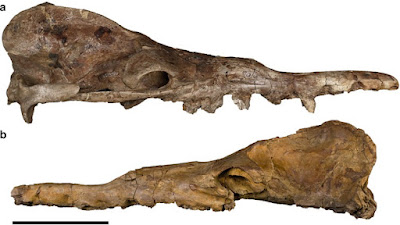
Kampouridis et al.: The Eocene–Oligocene Vertebrate Assemblages of the Fayum Depression, Egypt.
The Fayum has yielded one of the oldest and richest records of fossil
mammals from Africa. Today, the Fayum Depression represents an oasis in
the Western Desert of Egypt, south of Cairo, and contains several
localities that are world renowned for their diverse Eocene to Oligocene
vertebrate assemblages. The fossil sites of the Fayum area have
provided numerous extraordinarily well-preserved vertebrate remains
including complete skulls and partial skeletons of turtles, crocodiles,
birds, and mammals. Thus, the Fayum Depression has shed light onto the
evolution and biogeography of vertebrates during the Paleogene leading
to the establishment of two new orders, several new families and
subfamilies, and numerous new species of mammals. In recent years, these
fossils have provided clues about ecological aspects of some groups
using new methods such as stable isotope analysis and µCT scanning.
Despite the fact that the Fayum Depression represents a historical
excavation site that has been excavated and studied by numerous famous
palaeontologists since the nineteenth century, the area continues to
provide new insights into the evolution of mammals during the Eocene to
Oligocene, greatly improving our understanding of early Cenozoic
vertebrate evolution. This chapter presents a historical review of the
excavations in the Fayum Depression and a taxonomic overview of its
fossil fauna. Special focus was placed on the taxonomy and, where
applicable, ecology of terrestrial mammals from the historical Paleogene
Fayum localities.

Kimura and Hasegawa: Additional rostrum fragments of the holotype of
Miophyseter chitaensis.
Note: the original Bulletin of the Gunma Museum of Natural History directory now seems to be missing from the GMNH website - though I cannot read any Japanese, the website has changed and I can't see an obvious link to it.
Miophyseter chitaensis is a primitive physeteroid, which were found from the lower Miocene Morozaki
Group, central Japan. Kimura and Hasegawa(2022)described the cranium of the holotype (TMNH10785) which lacks most of the rostrum. In this short note, we describe three additional fragments of the rostrum of TMNH10785. The rostrum fragments were found from the matrix of the holotype of M. chitaensis. One of the fragments perfectly fits the already described rostrum fragment of the holotype, clearly suggesting that the fragments originated from the same individual of TMNH10785. An additional part of the rostrum fragments clearly suggests that M. chitaensis had a bottleneck-shaped rostrum.
Kimura et al.: A new Pleistocene physeterid specimen from the Kazusa Group in the western part of Kanto Plain and a review of the fossil cetaceans from the Pleistocene of Japan.
This study describes a previously undescribed fossil physeterid from the
Pleistocene of Tokyo. This fossil physeterid was recovered from the
Early Pleistocene, Fukushima Formation (ca. 1.60‒1.77 Ma), Kazusa Group
in 1971 and has long been known as “Hino Kujira” without detailed
descriptions. The specimen consists of fragments of the left maxilla,
and we estimate the original size of the maxilla can reach at least 3 m
long, suggesting an individual at least 11.5 m long. The maxilla is
dorsoventrally thick (eroded, but at least 188 mm), and such a thick
maxilla clearly differs from that of mysticetes but is similar to that
of the modern sperm whale, Physeter macrocephalus. In addition,
the average size of each pore on the spongy bone under the compact bone
layer is prominent (10 to 15 mm in diameter), consistent with the
macroporous structure of the maxilla of modern Physeter macrocephalus. We then provisionally make the taxonomic assignment of this Pleistocene specimen as Physeter
sp. Besides, we review seventy-three documented fossil cetaceans from
the Pleistocene of Japan, suggesting that the known paleodiversity of
the Japanese Pleistocene cetaceans (12 genera) is much lower than that
of modern composition (26 genera). This evident discrepancy likely
results from the research effort that currently only produces an
inadequately known fossil record of cetaceans.

Kuma et al.: The formation conditions of gigantic dolomite concretions including whale bones exposed in Unosaki coast, Oga peninsula, Japan.
Carbonate concretions occur in sedimentary rocks of widely varying
geological ages throughout the world. Recently, more than 100 gigantic
carbonate concretions with diameters ranging from 1 to 9 m have been
identified along the Unosaki coast of Oga Peninsula, Akita Prefecture,
Japan. The formation process of such gigantic concretions, some of which
along the Unosaki coast contain whale bones, remains uncertain. A
mineral composition analysis reveals that the major mineral of the
concretions is dolomite. Considering the location of dolomite
precipitation, their composition implies that the concretions were
formed in a reducing environment in which sulfate ions were removed.
Stable carbon and oxygen isotopic analysis reveals that the CaCO3 of
whale bone and concretions contains light δ13C and heavy δ18O,
suggesting that whale organic matter contributed to the formation of the
concretions. The gigantic carbonate concretions were presumably formed
by the accumulation and burial of whale carcasses with high
sedimentation rates, and subsequent reaction of carbon decomposed by
benthic and microbial activity with seawater.
Remarks: I can't read the majority of this article, but I will note that there are large dolomitic whale-bearing concretions in the Purisima Formation at Point Reyes (Marin County) - sometimes these concretions are up to about 5 meters across. Dick Hilton described to me a visit he took to the beach there (sometime in the 1960s I believe) after a large storm had stripped off much of the sand, and there was a 5-6 meter wide donut-shaped concretion with a baleen whale skeleton, that had been preserved in a C-shape.
Lambert et al.: Past beaked whale diversity in the North Sea: reappraisal through a new Miocene record
and biostratigraphic analyses.
Extant beaked whales (family Ziphiidae) are deep diving suction feeders
and none of them can be considered as a permanent resident of the
shallow southern North Sea. The rich fossil record of ziphiids from
Neogene deposits of this area is thus surprising. However,
chronostratigraphic intervals of most recorded taxa remain poorly
constrained, preventing from assessing the evolution of their local
diversity. In this work, we describe a new ziphiid cranium from the
Neogene of Antwerp (north of Belgium), which is attributed to Caviziphius aff. C. altirostris.
Sediment samples were extracted from 15 fossil ziphiid cranial remains
from this area (including the one described herein), referred to eight
species. The samples were analysed for their palynological content,
leading to improved chronostratigraphic ranges for several species.
Seven to eight ziphiid species from the southern North Sea, all from the
Messapicetus clade, are proposed to originate from a
Serravallian to Tortonian (late Middle to early Late Miocene) interval,
and three to six more precisely from the mid- to late Tortonian. Added
to the fossil record of other regions, these results point to a Late
Miocene radiation of members of the Messapicetus clade, possibly related to the synchronous worldwide decline of several hyper-longirostrine dolphin clades.

Contrasting with their suction feeding modern relatives in the families
Kogiidae and Physeteridae, Miocene physeteroids display a broad range of
feeding strategies. Despite the continuous improvements of the fossil
record, the transition from the earliest sperm whales to suction feeding
forms as well as the once prominent macroraptorial forms remains poorly
understood. In the present work, we investigate a partial sperm whale
skull from Lower Miocene (Burdigalian) strata of the Chilcatay Formation
of the East Pisco Basin, along the southern coast of Peru. Based on
this specimen, we describe a new species in the genus Diaphorocetus Ameghino, 1894, which was previously known only by the holotype of Diaphorocetus poucheti
(Moreno, 1892) from a roughly synchronous unit in Patagonia
(Argentina). Differing from the latter in its smaller cranial
dimensions, higher tooth count, and minor differences in the position of
facial foramina, the new species Diaphorocetus ortegai n. sp. confirms a key character of D. poucheti,
the marked dorsoventral flattening of the maxillary portion of the
rostrum. Such cranial proportions suggest that, compared to other
physeteroids, D. poucheti and D. ortegai n. sp.
were more efficient at performing fast lateral sweeps of their rostra to
capture small- to medium-sized prey items with their proportionally
small teeth. Recovered as stem physeteroids in our phylogenetic
analysis, these sister species contribute to the ecomorphological
disparity of sperm whales during the Early Miocene, but without
displaying any of the cranial and dental changes occurring in later,
macroraptorial and suction feeding sperm whales. The description of a
new species of Diaphorocetus from southern Peru increases the
similarities between the toothed whale faunas from the local Chilcatay
Formation and the Gaiman and Monte Leon formations of Argentinian
Patagonia, pointing not only to dispersal routes between the
southeastern Pacific and southwestern Atlantic during the Burdigalian,
but also to relatively similar ecological settings along the coasts of
Peru and Patagonia at that time.

Eurhinodelphinids are a family of extremely long-snouted dolphins that
once was widespread across the North Atlantic realm, but so far has not
been recorded from the epicontinental Paratethys Sea. Here, we describe a
new specimen of Xiphiacetus cristatus, including the cranium,
left ear bones and a partial mandible, from the Middle Miocene
(Badenian) of Austria. Our new fossil is the first record of this
species outside the North Atlantic proper, and the first unequivocal
record of eurhinodelphinids from the Paratethys. Its presence suggests a
local invasion via the Mediterranean, and corroborates the persistence
of an active marine gateway between the Mediterranean and the Central
Paratethys throughout the Middle Miocene. Measurements of the bony
labyrinth reveal that X. cristatus likely employed narrow-band
high-frequency echolocation, making eurhinodelphinids only the second
extinct odontocete family with this trait. Marked non-orthogonality of
the semicircular canals suggests that X. cristatus was unsuited to rapid head movements, and thus more likely a benthic forager than a snap feeder.

Remains of cetaceans, particularly odontocetes, are scarce in the Cuban fossil record. Here we describe the second odontocete (toothed whale) record from the Neogene of Cuba and extends the temporal distribution of this group in the Insular Caribbean into the Middle Miocene.
This account is based on two isolated teeth found in limestones of the
Güines Formation that crop out in a quarry near the town of Guanábana,
Matanzas City, northwestern Cuba. The specimens are referred to the
superfamily Physeteroidea incertae sedis. These findings, along with other fossils recovered from other Early and Middle Miocene
localities in the region support the hypothesis of a complex, diverse
marine vertebrate fauna on the formerly called “Habana-Matanzas channel”
and circum-Cuban waters during the Neogene.
Lyras et al.: Fossil brains provide evidence of underwater feeding in early seals.Pinnipeds (seals and related species) use their whiskers to explore
their environment and locate their prey. Today they live mostly in
marine habitats and are adapted for a highly specialised amphibious
lifestyle with their flippers for locomotion and a hydrodynamically
streamlined body. The earliest pinnipeds, however, lived on land and in
freshwater habitats, much like mustelids today. Here we reconstruct the
underwater foraging behaviour of one of these earliest pinnipeds (Potamotherium),
focusing in particular on how it used its whiskers (vibrissae). For
this purpose, we analyse the coronal gyrus of the brain of 7 fossil and
31 extant carnivorans. This region receives somatosensory input from the
head. Our results show that the reliance on whiskers in modern
pinnipeds is an ancestral feature that favoured survival of stem
pinnipeds in marine habitats. This study provides insights into an
impressive ecological transition in carnivoran evolution: from
terrestrial to amphibious marine species. Adaptations for underwater
foraging were crucial for this transition.

Marini et al.: Age and Depositional Environment of Whale-Bearing Sedimentary Succession from the Lower Pliocene of Tuscany (Italy): Insights from Palaeomagnetism, Calcareous Microfossils and Facies Analyses.
A c. 31 m thick section straddling the fossil find of an Early Pliocene
baleen whale (“Brunella”, hereafter), made in 2007 in the sedimentary
fill of the Middle Ombrone Basin of Tuscany, is investigated for
depositional age and environment combining palaeomagnetic,
micropalaeontological (Foraminifera and calcareous nannofossils) and
sedimentary facies analyses. Resting unconformably onto Late Miocene
continental deposits, the Early Pliocene marine deposits include, from
bottom to top, a coarse-grained wave-winnowing lag, the few metres-thick
fossiliferous sandstone bedset from which Brunella was unearthed, and
several metres of clays. The stratigraphic organisation of these
deposits indicate deposition in a deepening upward inner shelf
environment. Successful isolation of characteristic remanent
magnetisation and calcareous nannofossil content indicate the
investigated marine section was deposited during the interval of
polarity Chron C3n.2n corresponding to the basal part of the
Mediterranean nannofossil zone MNN13 (between Helicosphaera sellii Base common and the Amaurolithus primus
Top) and allow estimating the depositional age of Brunella to c. 4.6
Ma. Sedimentary facies, benthic Foraminifera association and anisotropy
of magnetic susceptibility characterising the deposits that embedded
Brunella suggest deposition above the fair-weather base level.

Teeth are the primary tool used by most mammals to capture and process
food. Over the lifetime of an individual, they progressively wear
through contact with each other (attrition) and with food (abrasion),
creating distinctive patterns that reflect function and diet. Unlike
their terrestrial cousins, many marine mammals capture prey via suction,
which so far has not been associated with a specific wear pattern.
Here, we describe two new types of tooth wear across 18 species of
modern marine mammal (beaked whales, belugas, killer whales,
globicephalines, and various seals) that likely stem from this
behaviour: “glossowear”, which primarily affects the lingual side of the
crown and plausibly records piston-like tongue movements during suction
feeding; and “hydrowear”, which wraps around the sides of the crown and
occurs as water is expelled from the mouth. Both wear types differ from
attrition and biting-related abrasion in their surface characteristics
and location on the crown. Horizontal scratches suggest a physical wear
process, rather than dental erosion (acid corrosion) and tooth
abfraction (microfracture). Since suction specifically exploits the
liquid properties of water, physical evidence of this behaviour may help
to elucidate marine mammal feeding ecology and evolution. For example,
glossowear is found in the toothed ancestors of baleen whales
(mammalodontids, at least one aetiocetid, and likely Mystacodon),
where it suggests an important role for suction in the emergence of
filter feeding. By contrast, it is absent in most long-snouted toothed
whales and dolphins, indicating that these animals mostly bite, rather
than suck in, their prey.

Marx et al.: Kingdom Animalia, phylum Chordata, class Mammalia (marine mammals). [In The Marine Biota of Aotearoa New Zealand. Updating our marine biodiversity inventory].
Aotearoa New Zealand today is home to nine extant species of pinniped (seals and sea lions) and 45 cetaceans (whales and dolphins), many of which are globally rare (Table 25.1; Figs 25.1, 25.2). This is slightly more than the eight pinnipeds and 43 cetaceans listed in King et al. (2009), with new discoveries like Ramari’s beaked whale, Mesoplodon eueu Carroll et al., 2021, continuing to add to this diverse local fauna. New Zealand’s marine mammal fossil assemblage is equally rich and has increased by twelve species since King et al. (2009), with a further four having been reassigned to new genera. There is enormous potential for further fossil discoveries, with research so far having focused largely on the upper Oligocene (28–23 million years ago) of the southeastern South Island. The lists of New Zealand extant and fossil marine mammals reported by King et al. (2009) are reviewed here, and updated checklists are provided.
Matsui and Pyenson: New evidence for the antiquity of Desmostylus (Desmostylia) from the Skooner Gulch Formation of California.
Desmostylus is an extinct marine mammal genus that belongs to
Desmostylia, a clade of extinct herbivorous mammals. While desmostylian
remains are widely reported from Paleogene and Neogene marine strata of
the North Pacific Rim, occurrences of the genus Desmostylus are almost entirely limited to middle Miocene strata, with only a few early Miocene records from Japan. Here we report a Desmostylus
tooth from the earliest Miocene (Aquitanian) Skooner Gulch Formation in
northern California, USA. This specimen exhibits cuspules around the
crown, a primitive trait of the subfamily Desmostylidae, as seen in more
basal branching desmostylid taxa such as Cornwallius and Ounalashkastylus,
but with a high tooth crown and thickened enamel. The specimen is also
diagnostically different from all other desmostylid genera, such as Cornwallius, and Ounalashklastylus. The Aquitanian age of the Skooner Gulch Formation implies that the distinctive tooth morphology of Desmostylus
has persisted, largely unchanged, for more than 15 million years and
that desmostylids possibly originated in western North America.

McMillan: Albert Koch's Hydrarchos: a hoax or a bona fide collection of bones.
This is the second essay of a two-part series on the life and collecting
activities of Albert Koch. After Koch traveled to England where he sold
his Missourium to the British Museum, the American mastodon that now
stands in the Natural History Museum of London, he then went to his
homeland in Germany. Koch left his family in Dresden, when he again
departed for the United States to pursue some additional paleontological
adventures. Following several weeks of travel, he arrived in Alabama
where he excavated the remains of a large, archaeocete whale, that he
named the Hydrarchos. Koch displayed the skeleton in New York,
and several other eastern cities before taking it to Europe. When in
Berlin, Koch was able to sell the skeleton to King Friedrich Wilhelm IV
of Prussia who placed it in the Royal Museum. Soon thereafter, Koch
returned to the United States and Alabama to discover a second whale
skeleton. He took this skeleton to Europe where it was exhibited in
several cities but, having received no offers, Koch returned with his
second Hydrarchos to the United States where it was initially
displayed in New Orleans, then St. Louis, and eventually Chicago. In his
later years, Koch turned his attention to the Academy of Science of St.
Louis where he became an active member and curator, as well as a
prospector for minerals. This essay examines the final chapters of
Koch’s life and his entrepreneurial showmanship tendencies versus contributions he may have made to science. This narrative is a sequel to an article published in Volume 41 Number 2 of Earth Sciences History that focused on Albert Koch’s Missourium. Together, the two essays capture the life and career of Albert C. Koch.

The Natural History Museum of the University of Pisa hosts one of the
most important osteological collections of cetaceans all over Europe, as
well as a conspicuous paleontological collection, including several
holotypes of Archaeoceti (archaic whales), Mysticeti (baleen whales),
and Odontoceti (toothed whales). In order to valorize these collections,
we used 3D technologies to digitize the most relevant specimens, create
an online archive, and make the resulting models accessible and
shareable with the broadest audience possible through social media
profiles and internet browsers. Tens of specimens were surface-scanned
using a structured-light scanner, and the resulting 3D models were
processed for post-production through the 3D software Blender whenever
necessary. All the 3D scans were then gathered in the online repository
Sketchfab, which was chosen for its user-friendly interface and common
usage among museum institutions. The result is a web page that hosts 35
surface scans of extant and extinct cetacean specimens. This Sketchfab
account was linked to the social media (Facebook and Instagram) profiles
of the MSNUP to increase the visibility of the museum and promote the
dissemination of its outstanding collections of modern and fossil
cetaceans. The preliminary results of such an effort are encouraging in
terms of views and online interactions. Hopefully, this effort of
digitization and online archiving will soon extend to other vertebrate
collections.

Merella et al.: Pliocene
Geotourism: Innovative Projects for Valorizing the Paleontological
Heritage of Three Different-Staged Quarries of Tuscany (Central Italy)
Quarries are areas of pivotal importance for investigation,
popularization, and educational purposes in the field of geosciences.
Here, we focus on three quarries of Tuscany (La Serra, Arcille, and
Certaldo) that have been home to significant finds of marine vertebrate
fossils. The three selected localities are representative of the many
active (La Serra), inactive (Arcille), and abandoned (Certaldo) Tuscan
quarries where vertebrate-bearing Pliocene deposits are exposed. Given
the richness and scientific value of their paleontological content
(including holotypes as well as otherwise unique specimens), the
abundance of exposed sedimentary structures, and the high potential for
open-air musealization, the La Serra, Arcille, and Certaldo quarries
should be regarded as geosites. These quarries are thoroughly described,
and several suggestions for their preservation and valorization are
proposed, focusing on their importance for geotourism, with the goal of
reaching out to the broadest audience possible. Many innovative
dissemination tools, including 3D technologies, are now available for
pursuing such an aim.

Paces et al.: Strontium Isotope Chronostratigraphic Age of a Sirenian Fossil Site on Santa Rosa Island, Channel Islands National Park, California.
Fossils in the order Sirenia (family Dugongidae) from Santa Rosa Island, part of Channel
Islands National Park in southern California, provide rare temporal and spatial links
between earlier and later evolutionary forms of dugongids, and add information about
their dispersal into the northeastern Pacific region. Marine sedimentary rocks containing
these fossils have characteristics of both the late Oligocene to middle Miocene Vaqueros
Sandstone and the early to middle Miocene Rincon formation observed elsewhere. To
determine a more precise age of the fossils, marine invertebrate shells were collected
from the same exposures as the sirenian fossils for chronostratigraphic assessment
using strontium isotope compositions and the well-calibrated seawater strontium evolution
curve. Shells used for analysis were from bivalve mollusks (Pycnodonte sp. [oyster] and Lyropecten sp. [scallop]) and crustaceans (Balanus sp. [barnacle]). Results show a wide range of 87Sr/86Sr values, indicating that shell materials experienced varying degrees of diagenetic
alteration. Strontium concentrations and 87Sr/86Sr values in subsamples of Pycnodonte shell show correlations between original shell material and a secondary component
having lower strontium concentrations and less radiogenic (lower) 87Sr/86Sr. In contrast, all Lyropecten shell analyses yielded a uniform 87Sr/86Sr value (0.708440±0.000010 [2× standard deviation]) over a wide range of strontium
concentrations (around 900 to 1,800 micrograms per gram [µg/g]). Results for Balanus shell subsamples show a range of strontium compositional behavior between the other
two types of shell. Acetic acid leachates of sandy matrix confirm that diagenetic
fluids had low 87Sr/86Sr values consistent with the least radiogenic values in Pycnodonte subsamples. A simple mixing model between two calcite end-members can explain observed
Pycnodonte data, although actual diagenetic processes likely involved secondary dissolution/reprecipitation
or strontium ion exchange between shell material and pore fluid. Data indicate that
only Lyropecten subsamples have retained their original 87Sr/86Sr compositions, resulting in a best-estimate age of 20.08±0.11 million years ago
(Ma) (±95-percent confidence interval [CI]). Although Dugongidae fossils have been
found in Miocene and younger sediments along the west coast of North America, the
Santa Rosa Island specimens represent some of the earliest and most accurately dated
sirenian fossils in the region. Chronostratigraphic results also constrain the timing
of the transgressional processes represented by shallow-water (Vaqueros Sandstone)
to deep-water (Rincon formation) depositional environments.

A fragment of a walrus skull of Neopleistocene age was found at a
distance of about 340 km from the mouth of the Pechora River. The skull
presumably belonged to a mature male Atlantic walrus 13–14 years old.
The radiocarbon date of the walrus bone shows an age outside the
method’s range (>45 Ka). Nitrogen and carbon isotope data from skull
collagen are discussed. The reason for the appearance of the walrus far
from the modern sea shore was, presumably, the Rodionovo (Shklov, MIS 7)
or boreal Sula (Mikulino, MIS 5e) marine transgression into the area of
the latitudinal part of the Pechora River. The relatively good
preservation of the bone testifies in favor of the Sula marine
transgression. The Rodionovo age of the walrus can be assumed on the
basis of the presence of shallow water marine deposits lying between two
Middle Pleistocene moraines—Pechora (Dnieper, MIS 8) and Vychegda
(Moscow, MIS 6).
Prista et al.: Considerations on the Portuguese Sirenia (Mammalia) fossil record.
Marine mammals of the Order Sirenia are good palaeoenvironmental proxies
in paleontological studies, due to their specific feeding and habitat
adaptations. Fossils of sirenians are rather common in the Portuguese
Neogene, having been reported for nearly 100 years, although most
findings correspond to rather fragmentary material, with no diagnostic
value. Still, some nominal taxa of Sirenia were referred to in the
literature, based either on identifiable fossils or on some undescribed
material preserved in collections. Following revisions of published
occurrences and new descriptions of previously unpublished material, a
general review of the fossil sirenians of Portugal is presented,
covering both the main geographic areas and the nominal taxa referred to
in the literature. Several findings are corrected regarding the
taxonomic classification, clearing the fossil record of Portugal, and
making available for researchers the complete list of Sirenia findings
and their geolocation in the Portuguese Neogene. An analysis of the
Portuguese Sirenia fossil record allowed to solve problems associated to
the previous published taxonomic works and increase the knowledge
regarding the Lower Tagus Basin, Setubal peninsula, Alvalade Basin and
Sirenia evolution in Portugal during the Lower and Middle Miocene. The
Portuguese fossil record of sirenians shows evidence that these marine
mammals were migrating towards south, which agrees with the European
data, strengthening the present interpretation that sirenians took
refuge in the Mediterranean and Gulf of Cadiz by the end of the Miocene,
inhabiting these regions up to the beginning of the Northern Hemisphere
Continental Glaciations by the end of the Piacenzian.

Here we present two new Miocene basal balaenomorph mysticetes recognized
by periotic bones with a unique combination of characters. The fossil
periotics originated from former shallow marine sediments and were
discovered in a suburban quarry of Bocholt in the German Münsterland
holding a number of remains of a multispecies community of mysticetes. A
detailed accompanying analysis of the internal and external structures
of mysticete periotics resulted in a critical review and revision of two
important characteristics of the pars cochlearis. The partition between
the openings for the facial nerve and the vestibulocochlear nerve,
named here ‘bony septum’ for baleen whales, has been developed so
prominently during mysticete evolution that the crista transversa is no
longer recognizable in derived forms, as it lies deep inside the inner
ear canal and within the fundus of the internal acoustic meatus where it
separates the cochlear nerve from the inferior vestibular nerve. We
show that the designation of the opening for the superior vestibular
nerve as ‘foramen singulare’ is misleading since this term describes the
opening for the nerve to the posterior semicircular canal within the
fundus of the internal acoustic meatus.

Roston et al.: Evolution and development of the cetacean skull roof: a case study in novelty and homology.
Skulls of living whales and dolphins (cetaceans) are telescoped—bones of
the skull roof are overlapped by expanded facial bones and/or
anteriorly extended occipital bones. Evolution of the underlying skull
roof (calvarium), which lies between the telescoped regions, is
relatively unstudied. We explore the evolution and development of the
calvarium of toothed whales (odontocetes) by integrating fetal data with
Oligocene odontocete fossils from North America, including eight
neonatal and juvenile skulls of Olympicetus†. We identified two
potential synapomorphies of crown Cetacea: contact of interparietals
with frontals, and a single anterior median interparietal (AMI) element.
Within Odontoceti, loss of contact between the parietals diagnoses the
clade including Delphinida, Ziphiidae and Platanistidae (=Synrhina).
Delphinida is characterized by a greatly enlarged interparietal. New
fetal series of delphinoids reveal a consistent developmental pattern
with three elements: the AMI and bilateral posterior interparietals
(PIs). The PIs most resemble the medial interparietal elements of
terrestrial artiodactyls, suggesting that the AMI of cetaceans could be a
unique ossification. More broadly, the paucity of conserved anatomical
relationships of the interparietals, as well as the fact that the
elements often do not coalesce into a single bone, demonstrates that
assessing homology of the interparietals across mammals remains
challenging.
Comments: This study was fun to work on and while I collected data and made much of the figures, this was Rachel's brainchild and I largely took a backseat on this one - Jonathan has thought about telescoping for most of his career, and Rachel's an expert on the way skull bones grow and suture together. We basically kept finding interparietal bones in early odontocetes but they seemed to be different in layout and position: simocetids have three or four interparietals with a long leaf-shaped elemenet that forms along the midline and fuses to the parietals early. Waipatiids occasionally have a large, but wide interparietal; xenorophids have a plug-shaped interparietal that is forward-placed and frequently contacts the frontals and parietals. We named this median bone the AMI - anterior median interparietal - and tracked the occurrence of it and other interparietal bones amongst cetaceans, and found that the AMI might be a bone that is unique to Neoceti (we also reported it in Coronodon). These interparietal bones likely form as a result of increasing brain size in Odontoceti and a way to add some ossification centers on the top of the brain that can knit together with the parietals later on in growth - as the brain increases in size along the odontocete stem, the parietals are separated from one another longer during ontogeny, and in most odontocetes, completely separated throughout ontogeny.

Rapid global warming is severely impacting Arctic ecosystems and is
predicted to transform the abundance, distribution and genetic diversity
of Arctic species, though these linkages are poorly understood. We
address this gap in knowledge using palaeogenomics to examine how
earlier periods of global warming influenced the genetic diversity of
Atlantic walrus (Odobenus rosmarus rosmarus), a species closely
associated with sea ice and shallow-water habitats. We analysed 82
ancient and historical Atlantic walrus mitochondrial genomes
(mitogenomes), including now-extinct populations in Iceland and the
Canadian Maritimes, to reconstruct the Atlantic walrus' response to
Arctic deglaciation. Our results demonstrate that the phylogeography and
genetic diversity of Atlantic walrus populations was initially shaped
by the last glacial maximum (LGM), surviving in distinct glacial
refugia, and subsequently expanding rapidly in multiple migration waves
during the late Pleistocene and early Holocene. The timing of
diversification and establishment of distinct populations corresponds
closely with the chronology of the glacial retreat, pointing to a strong
link between walrus phylogeography and sea ice. Our results indicate
that accelerated ice loss in the modern Arctic may trigger further
dispersal events, likely increasing the connectivity of northern stocks
while isolating more southerly stocks putatively caught in small pockets
of suitable habitat.

Baleen whales (mysticetes) include the largest animals on the Earth. How
they achieved such gigantic sizes remains debated, with previous
research focusing primarily on when mysticetes became large, rather than
where. Here, we describe an edentulous baleen whale fossil (21.12–16.39
mega annum (Ma)) from South Australia. With an estimated body length of
9 m, it is the largest mysticete from the Early Miocene. Analysing body
size through time shows that ancient baleen whales from the Southern
Hemisphere were larger than their northern counterparts. This pattern
seemingly persists for much of the Cenozoic, even though southern
specimens contribute only 19% to the global mysticete fossil record. Our
findings contrast with previous ideas of a single abrupt shift towards
larger size during the Plio-Pleistocene, which we here interpret as a
glacially driven Northern Hemisphere phenomenon. Our results highlight
the importance of incorporating Southern Hemisphere fossils into
macroevolutionary patterns, especially in light of the high productivity
of Southern Ocean environments.
Comments: the evolution of body size in mysticetes is one of my favorite debates in marine mammal paleontology - make sure to check out my blog post on this topic here.
Seppä et al.: Polar bear’s range dynamics and survival in the Holocene.
Polar bear (Ursus maritimus) is the apex
predator of the Arctic, largely dependent on sea-ice. The expected
disappearance of the ice cover of the Arctic seas by the mid 21st
century is predicted to cause a dramatic decrease in the global range
and population size of the species. To place this scenario against the
backdrop of past distribution changes and their causes, we use a fossil dataset to investigate the polar bear's past distribution dynamics during the Late Glacial and the Holocene. Fossil results indicate that during the last deglaciation, polar bears were present at the southwestern margin of the Scandinavian Ice Sheet, surviving until the earliest Holocene.
There are no Arctic polar bear findings from 8000–6000 years ago (8–6
ka), the Holocene's warmest period. However, fossils that date from 8-9
ka and 5–6 ka suggest that the species likely survived this period in
cold refugia located near the East Siberian Sea, northern Greenland and
the Canadian Archipelago. Polar bear range expansion is documented by an
increase in fossils during the last 4000 years in tandem with cooling
climate and expanding Arctic sea ice. The results document changes in
polar bear's distribution in response to Late Glacial and Holocene
Arctic temperature and sea ice trends.
Solis-Anorve et al.: Primer registro de un balenoptérido de la Cuenca Los Barriles, Mioceno tardío
B.C.S., México [First record of a balenopterid from Los Barriles Basin, Late Miocene B.C.S., Mexico].
In the southern region of the Baja California Sur state (BCS), Mexico
has located Los Barriles sedimentary basin, which was part of the
extension of the opening of the Gulf of California . Its evolution began
in the late Miocene (8-7 Ma). The Trinidad Formation is found in this
basin, with a late Miocene to Pliocene age. The marine sedimentary
sequence is composed of mudstones, siltstones, and sandstones,
interpreted as a shallow to deep water marine environment with gravity
flows. In this area, in 1999, mysticete was collected at the El
Cardonal locality on the La Higuera stream, consisting of a
siltstone-sandstone concretion. In which there is an in situ tympanic bula and periotic complex with affinity to the genus Incakujira.
Tanaka et al.: A New Fossil Rorqual Aff. Balaenoptera bertae Specimen from the Shinazawa Formation (Late Pliocene to Early Pleistocene), Yamagata, Japan.*
More than 23 extinct species and 10 extant species of the
Balaenopteridae are known. Our knowledge of the family Balaenopteridae
is increasing quickly, however, few fossil records support a
circum-North Pacific distribution of balaenopterid genera and species.
Because of limited preservations, most rorqual fossils reported from the
western North Pacific can only be identified to the family level. A
skull from the Shinazawa Formation (late Pliocene to Early Pleistocene)
in Yamagata, Japan, is identified as aff. Balaenoptera bertae by
possessing two diagnostic features of the species: large occipital
condyles, and a posteriorly elongate postglenoid process. Combination of
four more features also support that the specimen is a closely related
to B. bertae. The specimen is probably a slightly older individual than the holotype of B. bertae,
based on the estimated bizygomatic width and slightly longer posterior
process of the tympanoperiotic. The first and only report of B. bertae
was from the Pliocene Purisima Formation in California, USA. The
specimen from Japan is incompletely preserved, but shows the occurrence
of B. bertae in the western North Pacific for the first time, as
many living balaenopterids are distributed across the North Pacific,
such as Balaenoptera musculus, B. physalus, B. borealis, B. acutorostrata, and Megaptera novaeangliae.
Comments: This to me is one of the most personally gratifying papers to come out this year, even if it is one of the more humble papers in scope. This study reports a specimen of Balaenoptera bertae - a fossil I discovered and excavated when I was only 19 - from slightly younger rocks in Japan! This indicates that this species had a circum North Pacific distribution. Better yet, this paper was published by my friend Yoshi Tanaka, who I shared an office with during my 3.5 years in New Zealand! We disagreed on the thermostat in the office (he was perpetually warm, I was perpetually freezing) but we had a great time in that little office and got a ton of killer research done in there. Along with many, many discussions comparing Japan and the USA.
Tanaka et al.: A new specimen of cf. Isanacetus laticephalus (baleen whale) from the Oi Formation, Ichishi Group (late early Miocene) in Japan.In the history of baleen whales, the early Miocene is one of not a
well-known time. Many baleen whales from the Miocene are known as
“cetotheres”. The “cetothere” Isanacetus laticephalus was a baleen whale from the early to middle Miocene that is only known from Japan. The holotype and paratype of I. laticephalus are well-preserved, and the age of the species I. laticephalus
makes it one of the earlier basal plicogulans; however, its
phylogenetic position is unclear. Here, a new cranium including the
periotic from an early Miocene deposit (about 18.5 to 17.0 Ma) of the Oi
Formation, Ichishi Group in Mie, Japan is reported as cf. I. laticephalus.
The specimen displays a combination of four periotic features: (i) a
large lateral tuberosity; (ii) a rectangular pars cochlearis; (iii) a
robust neck of the posterior process, and (iv) a cerebral aperture of
the facial canal that is smaller than that of the dorsal vestibular
area. This combination of features could be diagnostic for I. laticephalus, among basal plicogulans from the early and middle Miocene. Adding more referred specimens will expand the diagnoses of I. laticephalus, and firmly support phylogenetic trees with this species.

Cetacean fossil remains attributed to Cetotheriidae are certainly not a
novelty in the fossil record of the Carpathian Foreland or Foredeep,
several sites being mentioned; however there remains much material in
institutional collections that can still add to the number of
fossiliferous localities where cetotheriids can be found. The aim of
this paper is to bring to attention new material from fossiliferous
localities from the western Dacian Basin (Gorj and Vâlcea Counties),
from the collections of the National Geological Museum. The specimens
are described, identified based on comparisons with similar specimens
from published literature and a discussion about the species
Cetotherium priscum is provided.
Tosetto et al.: Cranial Material of Long-Snouted Dolphins (Cetacea, Odontoceti, Eurhinodelphinidae) from the Early Miocene of Rosignano Monferrato, Piedmont (NW Italy): Anatomy, Paleoneurology, Phylogenetic Relationships and Paleobiogeography.We provide a new study of previously published eurhinodelphinid
materials from the early Miocene of Piedmont (NW Italy) based on a new
preparation of the fossil specimens. We studied specimens previously
assigned to Tursiops miocaenus and Dalpiazella
sp. and provide new anatomical data on the eurhinodelphinid skull and
ear bones. In particular, we suggest that a skull that was previously
assigned to Tursiops miocaenus must be reassigned to Ziphiodelphis sigmoideus
(Cetacea, Odontoceti, Eurhinodelphinidae) based on new comparisons of
the squamosal. This finding enabled us to provide new anatomical
information on the ear bone anatomy of Z. sigmoideus that was previously unknown. The material originally assigned to Tursiops miocaenus
is currently lost. For this reason and due to the fact that the partial
illustration of this species by Portis does not allow us to find
diagnostic characters for this species, we decided that Tursiops miocaenus is a nomen dubium. Analysis of additional isolated teeth previously assigned to Tursiops miocaenus led to the conclusion that these specimens represent Odontoceti incertae sedis.
We performed a new phylogenetic analysis by adding newly discovered
character states to a previous dataset and a paleobiogeographic analysis
of Eurhinodelphinidae. We found two monophyletic clades within this
family. The paleobiogeographic pattern found by the present work
suggests the existence of North Atlantic and Mediterranean clades with
some species distributed among both basins. We analyzed the virtual
endocast of Ziphiodelphis sigmoideus and found that it resembles that of Schizodelphis
in several respects, suggesting that some of the more derived
characters of the odontocete brain were still absent in these early
Miocene eurhinodelphinids.
Tsai: In search of the origin of crown Mysticeti.
Recent research on mysticete fossils from the Late Eocene and Oligocene
has revolutionised our understanding of the diversity and evolutionary
scenarios for early baleen whales. For example, aetiocetids are a
possible, though controversial, lineage that bridges the gap between the
toothed and baleen-bearing mysticetes, and eomysticetids show a further
transitional step towards the baleen-bearing status, with the presence
of non-functional dentition in adults. However, information about the
origin of crown mysticetes, including the most recent common ancestor of
all extant lineages and its descendants, is critical to further
understanding the evolution of baleen whales. The phylogenetic positions
of the Oligocene Toipahautea, Whakakai, Horopeta, and Mauicetus
from New Zealand remain unresolved and problematic, but all four genera
show a close relationship with crown mysticetes. The original and
subsequent cladistic analyses have consistently revealed a sister
relationship between the Toipahautea-to-Mauicetus grade and crown mysticetes, and Horopeta
has been placed close to the cetotheriids within the crown group. This
review aims to stimulate more research on this topic by elucidating the
origin of crown mysticetes, which likely experienced a poorly known
radiation event during the Oligocene that established the modern
lineages.

A cetacean vertebra from presumably Bartonian strata near Taradell, Northeastern Spain, described by Pilleri in 1989, is here re-examined. Also a description of the local stratigraphy is given. Notwithstanding the rather severe damage of the vertebral centrum, it shows the same characteristics as vertebrae ascribed to Pachycetus (‘Platyosphys’; ‘Basilotritus’) sp. from, amongst others, Ukraine, Germany and Belgium. The characteristics are: the combined presence of a compact, circumferential multi-layered cortex, the pock-marked surface of the vertebral centrum, the pachyostotic pedicles of the neural arch and finally the probable elongation of the vertebral centrum, the transverse processes and the pedicles of the neural arch. The compactness of the midpart of the vertebral centrum has been measured and is compared with that of other taxa. The find extends the geographic distribution of this genus to Southwestern Europe. The vertebra appears to belong to a small species of Pachycetus, which was until now not known with certainty from Europe, although some similar-sized vertebrae from the Southern Bight of the North Sea have recently been described.

Velez-Juarbe: New heterodont odontocetes from the Oligocene Pysht Formation in Washington State, U.S.A., and a reevaluation of Simocetidae (Cetacea, Odontoceti).Odontocetes first appeared in the fossil record by the early Oligocene,
and their early evolutionary history can provide clues as to how some of
their unique adaptations, such as echolocation, evolved. Here, three
new specimens from the early to late Oligocene Pysht Formation are
described further increasing our understanding of the richness and
diversity of early odontocetes, particularly for the North Pacific.
Phylogenetic analysis shows that the new specimens are part of a more
inclusive, redefined Simocetidae, which now includes Simocetus rayi, Olympicetus sp. 1, Olympicetus avitus, O. thalassodon
sp. nov., and a large unnamed taxon (Simocetidae gen. et sp. A), all
part of a North Pacific clade that represents one of the earliest
diverging groups of odontocetes. Amongst these, Olympicetus thalassodon
sp. nov. represents one of the best known simocetids, offering new
information on the cranial and dental morphology of early odontocetes.
Furthermore, the inclusion of CCNHM 1000, here considered to represent a
neonate of Olympicetus sp., as part of the Simocetidae, suggests
that members of this group may not have had the capability of
ultrasonic hearing, at least during their early ontogenetic stages.
Based on the new specimens, the dentition of simocetids is interpreted
as being plesiomorphic, with a tooth count more akin to that of
basilosaurids and early toothed mysticetes, while other features of the
skull and hyoid suggest various forms of prey acquisition, including
raptorial or combined feeding in Olympicetus spp., and suction feeding in Simocetus.
Finally, body size estimates show that small to moderately large taxa
are present in Simocetidae, with the largest taxon represented by
Simocetidae gen. et sp. A with an estimated body length of 3 m, which
places it as the largest known simocetid, and amongst the largest
Oligocene odontocetes. The new specimens described here add to a growing
list of Oligocene marine tetrapods from the North Pacific, further
promoting faunistic comparisons across other contemporaneous and younger
assemblages, that will allow for an improved understanding of the
evolution of marine faunas in the region.
Comments: Between this and the Xenorophus monograph, it's been a banner year for stem odontocetes! This is a very important study, an in-depth followup to the Jorge's 2017 paper naming Olympicetus. This monograph reports a new species of Olympicetus, Olympicetus thalassodon, along with Olympicetus sp. 1 and a fourth Olympicetus-like simocetid. The phylogenetic analysis in this study firmly places Olympicetus into a clade with CCNHM 1000 (from Racicot et al., 2019) and Simocetus - and these taxa are formally identified as belonging to the Simocetidae. Which is really convenient, because I've been lazily calling Olympicetus a simocetid for years.
Veress and Codrea: A CATALOGUE OF FOSSIL SIRENIANS HOUSED IN THE MUSEUM
OF PALEONTOLOGY-STRATIGRAPHY, “BABEȘ-BOLYAIˮ UNIVERSITY,
CLUJ-NAPOCA.
The Palaeontology-Stratigraphy Museum is hosted by the Directorate for Heritage of the “Babeș-Bolyaiˮ University from Cluj-Napoca. Its collections were founded in the 19th century, then gradually enriched through donations of the professors and students, or by exchanges with other museums. They were initially used for teaching and research purposes and are nowadays available for the public as well. The sirenian fossils in the museum’s collection, even though are not many, represent an important heritage, a valuable tool in illustrating the Paleogene marine fauna of Romania and the worldwide fossils of these marine mammals. Today, the museum hosts 39 pieces of sirenian fossils. The aim of this article is an inventory of these fossils and the revision of the data referring to each piece. This paper includes the following data: the material, inventory numbers, the name of the locality where the fossil originated from, the stratigraphic unit, the geological age, the name of donor when available and, in few cases, measurements and short descriptions of the pieces, when necessary.

Viglino et al.: The better to eat you with: morphological disparity and enamel ultrastructure in odontocetes.
Variations in the shape and size of teeth have been associated with
changes in enamel ultrastructure across odontocetes. Characterizing
these features in extinct taxa can elucidate their functional morphology
and feeding strategy, while also shedding light into macroevolutionary
patterns during the evolutionary history of cetaceans. This study aimed
to (1) describe the enamel and dentine ultrastructure of the Early
Miocene odontocetes Notocetus vanbenedeni and Phoberodon arctirostris
from Patagonia (Argentina) and (2) quantify tooth and enamel
ultrastructure morphological disparity among odontocetes. Enamel was
predominantly prismatic, thin in the anterior tooth of N. vanbenedeni and P. arctirostris; whilst thick on the posterior tooth of N. vanbenedeni. Together with skull morphology, data suggests a raptorial feeding strategy for P. arctirostris and a combination suction feeding method for N. vanbenedeni.
Statistical analyses supported these inferences, indicating that enamel
characters are useful for paleoecological research. Morphological
disparity analyses showed that extant odontocetes occupy a larger
morphospace and have more disparate morphologies, whilst extinct
odontocetes were more similar among each other than with the extant
group. There was no clear phylogenetic-based grouping, suggesting that
tooth and enamel ultrastructure disparity were mainly driven by
ecological pressures. These results highlight enamel ultrastructure as a
source for broader-scale paleoecological studies in cetaceans.

challenges in research in the last 30 years.Records of aquatic mammal fossils (e.g. cetaceans, pinnipeds,
sirenians, mustelids, and desmostylians) from Latin America (Mexico to
Tierra del Fuego, including Antartica) span since the mid-1800s. Aquatic
mammal fossils received little attention from the scientific community,
with most of the first studies conducted by Northern Hemisphere
researchers. Over the last 30 years, paleontological research in Latin
America has increased considerably, with descriptions of several new
species and revisions of published original records. The Latin American
fossil record of marine mammals spans from the Eocene to the
Pleistocene, with formations and specimens of global significance. All
three main groups of cetaceans are represented in the continent
(Archaeoceti, Mysticeti, and Odontoceti). Pinnipedia are represented by
the families Otariidae and Phocidae, with records starting in the Middle
Miocene. Both living families of Sirenia (Trichechidae and Dugongidae)
are recorded. While less common, but still relevant, records of
desmostylians and mustelids are known from Oligocene and Miocene
deposits. This review provides a summary of the aquatic mammals known to
date, with a special focus on the advances and developments of the last
30 years, since Cozzuol’s (1996) review of the South American fossil
record. An up-to-date complete list of species based on the literature
and unpublished data is also provided. The study also provides future
directions for paleontological research in Latin America, and discusses
the challenges and opportunities in the field, including the emergence
of a strong new generation of Latin American researchers, many of whom
are women.
Comments: I've skimmed this paper, and it is one I really need to sit down and read again more carefully: I have a feeling that this is one of the most important papers of the year. This new genre of papers - reflections on our own discipline and studies of ethics - is a welcome new direction and I often feel that these are more interesting than a steak-and-potatoes description of a new species.
Voss et al.: New findings of Prototherium ausetanum (Mammalia, Pan-Sirenia) from paving stones in Girona (Catalonia, Spain)?Taxonomic and morphological approaches on Eocene sirenians from
Catalonia (Spain) benefit from a newly discovered specimen found in a
quite unusual locality, the pedestrian zone in the city of Girona. Two
fossil-bearing limestone slabs from middle Eocene (Bartonian) layers of a
quarry in the wider surrounding area north-west of Barcelona, were
CT-scanned in the Clínica Girona to enhance more detailed
investigations. Post-processing of the scans and, as far as possible,
3D-reconstruction of the preserved elements in the slabs was performed
at Museum für Naturkunde Berlin. Thereby, a skull of a Dugong
specimen was used as a reference point. Based on the combined analysis
of macroscopic and CT-data, the specimen most likely represents Prototherium ausetanum
Balaguer & Alba, 2016 and complements the available information of
the holotype and hitherto only known specimen of that species. The
Girona specimen is an adult, but small individual that corroborates P. ausetanum as a generally small-sized species compared to other known Prototherium taxa.